Why Drive Across the Gulf?
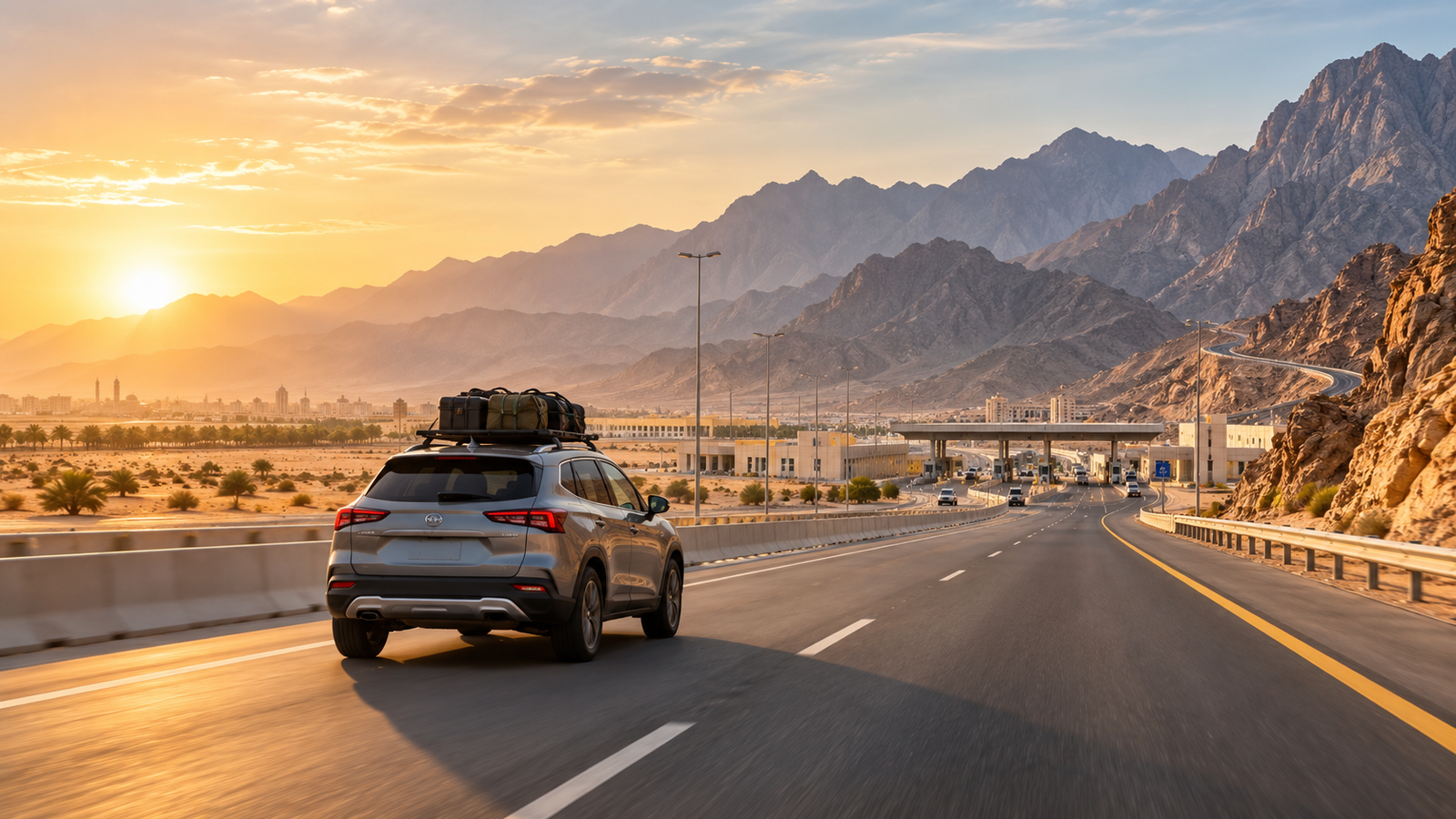
Taking a car across the border is easily the best way to see the Arabian Peninsula beyond the glass towers. The journey runs roughly 450 kilometers from the Abu Dhabi coast right into Oman’s rugged Hajar Mountains, usually taking around 5 to 6 hours total. Honestly, it stands out as one of the smoothest international road trips in the region.
Ever wondered what lies past those endless desert stretches? Well, changing from smooth UAE highways to Oman’s winding mountain routes goes surprisingly well – as long as your paperwork is in order before setting off.
Essential Logistics and Navigating the Border
A smooth trip always boils down to handling administrative details early. Crossing out of the UAE requires a few mandatory items: an Omani tourist visa (easiest to grab via the Royal Oman Police website), a passport with at least six months left on it, and cross-border vehicle coverage known as the Orange Card.
When sorting out transport in the UAE, keeping cash flow flexible makes a big difference for travel expenses. Most visitors opt to rent a car in Abu Dhabi without deposit simply to avoid locking up heavy card holds that are better used for border fees, extra insurance, or spontaneous stops along the way.
Border Essentials Checklist
- NOC (No Objection Certificate): Non-negotiable for rentals crossing boundaries. Ensure the rental firm prints and signs this explicitly.
- Checkpoint Choice: Khatmat Malaha or Mezyad (near Al Ain) work best for travelers heading down toward Muscat or Musandam.
- Cash On Hand: Keep a mix of UAE Dirhams (AED) and Omani Rials (OMR) ready for minor road tolls or border coffee stops.
Clear paperwork makes or breaks the timeline here. Missing a single stamp often turns a quick 30-minute border check into a frustrating multi-hour wait under the sun.
The Scenic Route: Highlights from Abu Dhabi to Muscat
The drive typically starts along the main E11 highway before cutting inward toward Al Ain or Fujairah. You notice the shifts in terrain pretty quickly – flat, open sand dunes slowly turn into jagged, dark mountain ridges near the border posts.
A solid plan involves leaving Abu Dhabi right around sunrise, grabbing a quick breakfast stop near Jebel Hafeet in Al Ain, and reaching the border around mid-morning. For instance, travelers making this trip recently managed to clear the Mezyad border checkpoint in under 45 minutes just by having physical printouts of their NOC and insurance handy. Another practical test showed that picking a mid-size crossover over a heavy V8 SUV slashed fuel expenses by almost a third across the long, flat highway legs. Leaving early also keeps you way ahead of the heavy mid-day tour bus queues.
As for driving standards, roads across the Gulf are top-tier, but speed monitoring is serious business. Radar systems in both countries track traffic closely, though radar tolerances differ – while the UAE allows a small buffer above the posted sign, Omani police enforce exact posted limits with zero leeway.
Mountain Roads, Wadis, and Vehicle Handling
Once you cross into Omani territory, the entire driving experience changes tone. Where the UAE gives you wide, six-lane straightaways, Oman throws in steep inclines and sharp bends – especially if you route toward Jebel Akhdar or the deep wadis around Nizwa.
Handling these higher passes takes a bit of care regarding brake wear and gear selection. Downshifting to use engine braking on long downhill stretches prevents brake pads from overheating, a classic mistake for drivers used only to flat city streets.
- 4WD Regulations: Police checkpoints leading up into high-altitude areas like Jebel Akhdar will actually turn back 2WD cars by law.
- Wadi Safety: Never park inside dry riverbeds if the sky looks overcast; desert flash floods sweep through surprisingly fast.
- Basic Gear: Throw a tire pressure gauge, plenty of drinking water, and extra power banks in the trunk before heading off main transit routes.
Smart Travel Budgeting and Road Considerations
Driving through this corner of the Gulf stays surprisingly affordable compared to standard European or American road trips. Gas prices across both nations remain low, usually hanging under $0.80 per liter.
- Fuel Stops: Highway stretches between towns get long, with service stations sometimes 70–80 km apart – refill once the tank hits a quarter.
- Insurance Costs: Purchasing short-term Omani insurance right at the border post usually runs between 100 and 200 AED depending on car type.
- Toll Systems: Abu Dhabi’s Darb toll system scans license plates automatically, so confirm your rental firm has registered the vehicle before departure.
Practical Insights for a Smooth Journey
Exploring the contrast between the high-tech UAE highways and Oman’s raw mountain passes makes for an unforgettable drive. Taking care of visas early, choosing a car rental that doesn’t freeze your bank balance, and staying mindful of local road rules ensures the entire trip runs without a hitch. Enjoy the drive!