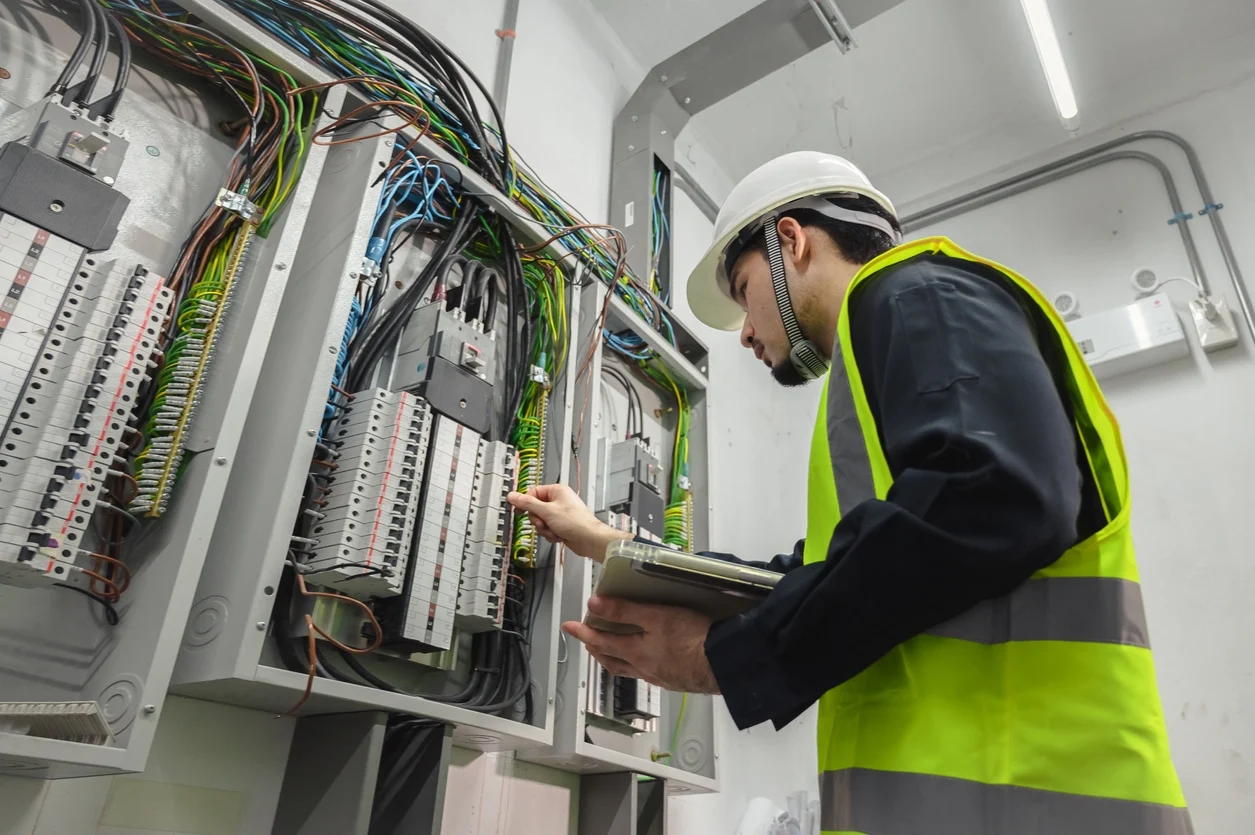
Walk into any modern commercial facility—whether it is a sprawling e-commerce fulfillment center, a mid-sized data hosting hub, or a retrofitted office building—and you will witness the reality of the “always-on” economy. Servers hum around the clock, automated conveyor belts run continuous night shifts, and banks of electric vehicle chargers pull massive amounts of power in the parking garage.
We celebrate this relentless productivity. However, hidden behind the drywall and locked inside steel cabinets in the basement, an invisible crisis is brewing. The electrical infrastructure in millions of commercial buildings was engineered for a 9-to-5 world. Today, by forcing these aging systems to operate under continuous, heavy loads, we are pushing critical protective components to the absolute brink of thermal and mechanical failure.
To understand why this is a looming threat to operational continuity, we have to look at the physics of electricity and the misunderstood lifespan of our frontline electrical defenders.
The Invisible Enemy: Thermal Fatigue
Electricity is essentially organized friction. As electrons flow through copper wiring and metal contact points, they generate heat. In a traditional operational model, a building hits peak electrical demand for a few hours in the afternoon, and then the system “cools down” overnight.
In an always-on environment, that cool-down period no longer exists. This introduces a dangerous phenomenon known as thermal fatigue.
When heavy-duty electrical components are subjected to constant, high-level heat without relief, the materials begin to fundamentally change. The conductive metals expand and contract infinitesimally, eventually loosening critical connection points. More importantly, the heavy-duty insulating plastics designed to contain the electricity begin to dry out, become brittle, and lose their dielectric (insulating) properties.
The Frontline Defenders
The ultimate fail-safes in these commercial environments are not the standard circuit breakers you find in a residential home. Industrial and commercial loads require highly specialized, heavy-duty protection.
These devices are designed to handle massive surges of power—sometimes thousands of amps. When a short circuit occurs, the energy released can literally vaporize metal and create an explosive ball of plasma known as an arc flash. The job of the heavy-duty breaker is to detect this surge and physically slam the circuit open in milliseconds.
To survive this violent event, the internal mechanisms are encased in a highly engineered, flame-retardant thermoset plastic. This casing must be perfectly intact to extinguish the arc and prevent a catastrophic fire. However, if that casing has been weakened by a decade of relentless, 24/7 thermal fatigue, its structural integrity is compromised exactly when it is needed most.
The Danger of the “Set It and Forget It” Mindset
The primary reason this threat goes unaddressed is a deeply ingrained psychological blind spot in facilities management. Because heavy electrical panels sit quietly in locked rooms, rarely making a sound, they are treated as permanent, indestructible fixtures of the building.
This “set it and forget it” mentality is incredibly dangerous. Circuit breakers are not solid blocks of metal; they are complex mechanical devices. They rely on tightly coiled springs, delicate thermal-magnetic sensors, and lubricated pivot points. Just like the engine of a car running for 200,000 miles without an oil change, an electrical breaker carrying a heavy load for twenty years will inevitably experience mechanical degradation. The springs lose their tension, the lubrication turns to sludge, and the metal contacts become pitted and scarred.
When a degraded breaker is finally called upon to stop a massive electrical fault, it may trip too slowly—or worse, it may fuse shut and fail to trip at all.
Shifting to Proactive Resilience
Modernizing an aging electrical infrastructure is not an option; it is an operational imperative. Facilities managers must shift from a reactive posture (waiting for a system to fail) to a proactive strategy of predictive maintenance and scheduled replacement.
This requires comprehensive thermal imaging audits to identify “hot spots” in aging panels and a willingness to completely swap out fatigued infrastructure before disaster strikes. When executing these massive overhauls, securing reliable hardware is often the biggest logistical hurdle. Whether a contractor is sourcing entire switchgear assemblies or simply procuring bulk molded case circuit breakers from Essential Electric Supply to efficiently swap out a failing commercial panel, having a reliable wholesale pipeline is critical to minimizing facility downtime.
The modern economy never sleeps, and the electrical systems powering it are bearing the brunt of that exhaustion. By recognizing the physical limits of our infrastructure and treating electrical maintenance with the urgency it deserves, businesses can protect their facilities, their investments, and most importantly, the safety of the people working inside them.