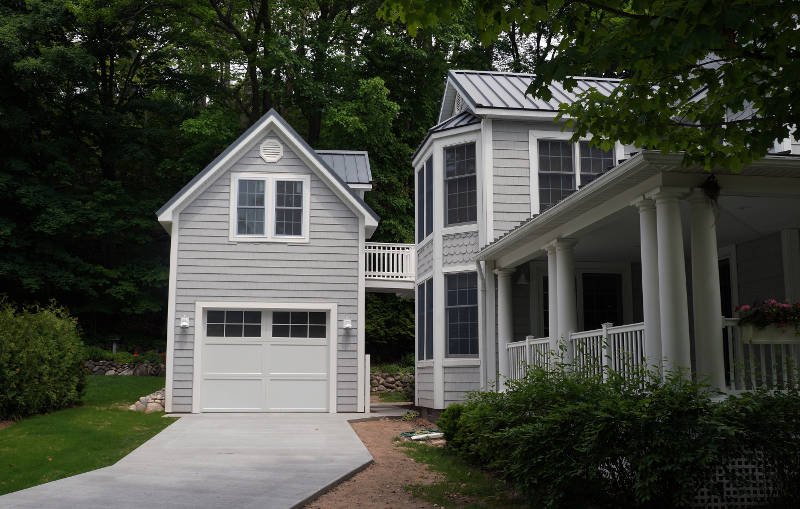
A common UK dilemma means that many homeowners feel squeezed for space or are struggling to keep their home function as the needs of their family grow. While we spend thousands on kitchens and bathrooms, the loft, garage and driveway are often left as dark, underutilised storage dumping grounds or unsecured spaces. By making smart, targeted upgrades in these three key areas, you can instantly boost your living space, protect your property and add real value to your home.
The Loft – Turning Dark Attics Into Light-Filled Spaces
The roof space is the largest unused footprint in the average British house. Instead of paying tens of thousands of pounds to extend outwards into the garden, looking upward offers a ready-made structure just waiting to be claimed. This space could be used as a master bedroom suite, a home office away from household noise, a children’s playroom or a creative studio. However, the primary barrier is that unconverted attics are inherently dark, cramped and oppressive spaces. To turn an attic into a livable room, lighting cannot be an afterthought. It is the foundational element that dictates whether the room feels like an inviting sanctuary or a converted storage cupboard.
Due to the angle of the roof pitch, a roof window can capture and direct up to twice as much natural sunlight into a room compared to a traditional vertical wall window or dormer of the same size. Overhead sunlight penetrates deeper into the corners of a room, eliminating dark shadow pockets created by sloped ceilings and instantly making small spaces feel vast and open.
A common fear when converting a loft space is that it is impossible to control the temperature due to poor overhead insulation or single paned skylights. Modern roof windows feature toughened double or triple glazing with low-emissivity coatings. This retains internal heat during icy British winters, while reflecting harsh solar rays in the summer, keeping the room comfortable year-round. Quality glazing will also act as a sound barrier, muffling the sound of heavy rainfall on the glass or traffic noise from the street below, ensuring a peaceful atmosphere.
The Garage & Access Points – Securing the Transition Zone
While homeowners focus heavily on the front door, intruders and opportunists often target transition zones, such as garages, side returns, utility alleys and split-level steps leading around the property. Garages and side entrances are uniquely vulnerable as they often house high-value, easily pawnable items, such as power tools, electric lawnmowers, golf clubs and other expensive leisure gear. They also can have secondary access doors into the main house that are hidden from street view. These zones are not just security risks, they can be physical safety hazards. Damp British weather turns concrete steps, side alleyways and garage thresholds into slick, hazardous slip zones for family members carrying heavy loads or navigating in the dark.
Split-level gardens, raised garage entrances and steep side paths require sturdy support to prevent slips, trips and falls during icy winters or wet autumns. Modern domestic safety rails are not clunky industrial scaffolding, they come in sleek finishes that are designed to complement brickwork and modern garage doors. Installing ergonomic handrails along steps and slopes ensures the entire home remains safe and accessible for all generations.
Similarly, standard garage doors can have weak, factory latches that can be pried open easily with basic tools. However, installing surface-mounted or floor-anchored security posts positioned directly in front of garage doors physically blocks them from being forced upwards or driven through. Visible, heavy-duty security hardware like this will act as an immediate psychological stop sign for opportunist thieves, as they will quickly move in from a property that has obvious physical defenses.
The Driveway – Organising and Protecting Your Perimeter
The front of British homes have also evolved. Many households are now converting front lawns into paved driveways to accommodate multiple cars, with it becoming the primary threshold of the property. On any given day, a typical UK driveway holds a significant portion of a household’s total financial assets. Despite holding thousands of pounds worth of equipment, driveways are often left completely open to the pavement, making them vulnerable to keyless car theft, unauthorised parking and everyday physical clutter.
Modern vehicle theft methods, such as relay attacks on keyless entry cars, means that digital security methods can sometimes fall short. Physical barriers still remain the most reliable way to prevent a vehicle from being driven away. There is a myth that security posts can look ugly or industrial, but modern residential bollards have stylish designs that match modern front doors, garage frames and architectural finishes.
Another problem faced at the front of homes is the everyday nuisance of bicycles, scooters and outdoor toys strewn across the driveway, leaning against cars, or blocking the path to the front door. Using a dedicated zone, such as a bicycle rack, reclaims valuable driveway square footage, turning a chaotic parking space into a clean, structured perimeter.
Combining security bollards with neat cycle stands visually frames the edges of your property, creating a clean, professional boundary line that clearly separates the private land from public pavement. When your driveway is organised and physically secured, you achieve the ultimate outdoor peace of mind, allowing you to pull into your driveway at night knowing everything is completely protected.
Upgrading a home is not just about the interior decor, it is also about expanding your usable space overhead while securing your perimeter on the ground. A truly modern home does not just focus on the rooms in the middle, it optimises space and safety from the highest ridge of the roofline right down to the pavement boundary.