Most mid-market companies in the United States are not short on interest in artificial intelligence. What they are short on is a clear, sequential path from curiosity to operational deployment. The gap between recognizing AI’s potential and executing a coherent plan is where most organizations stall — not because they lack technical resources, but because they lack structure.
This is a particularly acute problem for companies that sit between small businesses and enterprise-scale organizations. They carry enough operational complexity to make AI genuinely valuable, but they rarely have the internal architecture — dedicated data teams, change management protocols, or cross-functional governance — that large enterprises have built over years. The result is often a series of disconnected pilot projects, redundant vendor conversations, and organizational confusion about who owns what.
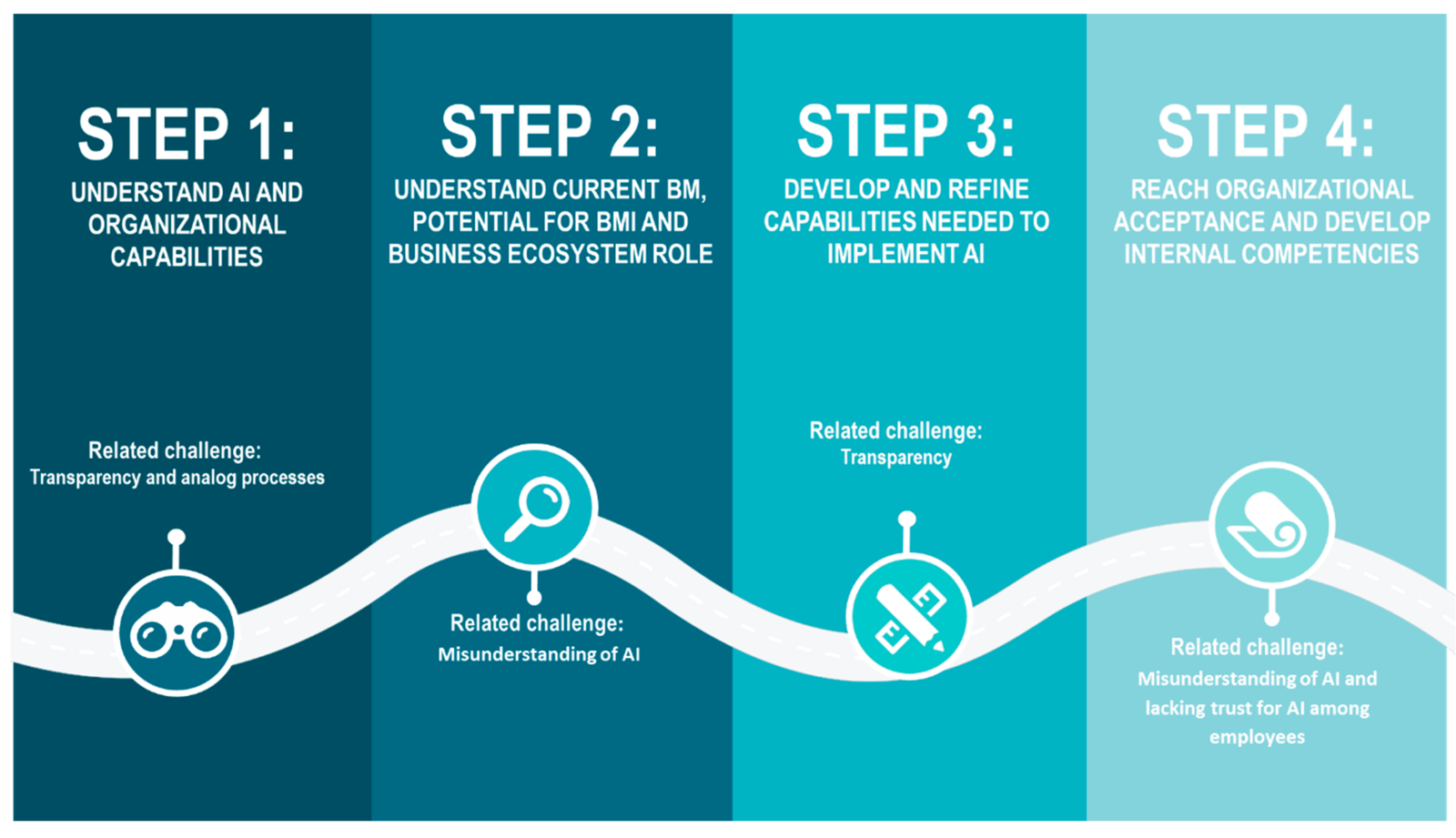
A structured, phase-based framework addresses this problem directly. It gives leadership teams a shared language, a sequence of decisions, and a clear sense of what must happen before what. The five phases outlined here reflect how AI strategy actually develops inside organizations that implement it well — not in a single leap, but in deliberate, connected steps.
Phase One: Organizational Readiness and Baseline Assessment
Before any AI initiative can take shape, an organization needs an honest accounting of where it stands. This is not a technology audit. It is an assessment of the people, processes, data infrastructure, and decision-making culture that will either support or constrain any AI program. Many companies skip this phase because it feels preliminary, but the failure to understand baseline conditions is one of the most consistent reasons AI programs underperform.
Structured ai strategy roadmap consulting begins here — not with tool selection or vendor comparison, but with a grounded assessment of operational readiness. When organizations work with experienced practitioners in this space, the assessment typically surfaces gaps that internal teams had normalized: inconsistent data collection across departments, unclear data ownership, decision processes that depend on individual judgment rather than documented criteria, and technology systems that were never designed to exchange information with one another.
The readiness phase should also include a realistic conversation about organizational appetite for change. AI implementation is not simply a technology change — it is a workflow change, often a role change, and sometimes a culture change. Understanding resistance points early allows leadership to plan for them rather than encounter them mid-deployment.
Data Infrastructure as a Precondition, Not an Afterthought
One of the most common mistakes mid-market companies make is pursuing AI applications before their data infrastructure can support them. AI systems depend on consistent, structured, accessible data. If data lives in siloed systems, is entered inconsistently by different teams, or lacks any standardized taxonomy, AI tools will produce unreliable outputs regardless of how sophisticated the underlying model is.
The readiness assessment should produce a clear map of where useful data exists, what condition it is in, and what work is required to make it usable. This does not mean perfecting data infrastructure before taking any steps — but it does mean understanding the real starting point so that phase timelines and resource estimates are grounded in reality.
Phase Two: Use Case Identification and Prioritization
The second phase is about deciding where to focus. Most mid-market organizations can identify a dozen or more places where AI could theoretically add value. The strategic challenge is not generating that list — it is filtering it based on feasibility, data availability, organizational readiness, and expected impact.
Effective use case prioritization requires input from multiple functions. Operations leaders understand where process bottlenecks create the most friction. Finance teams understand where cost inefficiencies are most significant. Customer-facing teams understand where service gaps are most visible. Without cross-functional input, organizations tend to prioritize use cases that are technically interesting rather than operationally significant.
Separating High-Value from High-Visibility Use Cases
There is often internal pressure to begin AI programs with something visible — a customer-facing chatbot, a dashboard with predictive analytics, or a tool that leadership can demonstrate in meetings. This impulse is understandable, but it frequently leads to early projects that consume resources without producing meaningful operational improvement.
High-value use cases are often less visible. They involve internal processes — demand forecasting, inventory management, document classification, or quality control workflows — where consistent AI-assisted decisions can compound into significant efficiency gains over time. These use cases tend to have cleaner data, clearer success metrics, and lower organizational risk. Starting with them builds confidence, demonstrates measurable returns, and gives teams experience with AI-assisted workflows before more complex deployments.
Phase Three: Governance, Accountability, and Risk Framing
AI governance is the part of strategy development that organizations most frequently delay. It feels administrative compared to the more engaging work of building tools and testing applications. But governance decisions — who owns AI outputs, how errors are identified and corrected, what human review is required before AI recommendations are acted upon — determine whether an AI program is sustainable or fragile.
The National Institute of Standards and Technology has published an AI Risk Management Framework that provides a structured basis for thinking about AI governance across reliability, safety, and accountability dimensions. Mid-market companies do not need to implement the full framework to benefit from its structure, but the underlying logic — that AI systems require defined accountability and monitoring — applies at any organizational scale.
Defining Accountability Without Creating Bureaucracy
One of the practical challenges in AI governance for mid-market companies is building accountability structures that are meaningful without becoming burdensome. Enterprise organizations often have dedicated AI ethics committees, data governance boards, and multi-layer review processes. These structures make sense at scale, but they can paralyze smaller organizations if imported wholesale.
A more proportionate approach assigns clear ownership for each AI application — a specific role or team responsible for monitoring outputs, flagging anomalies, and escalating concerns. It also establishes simple review cadences rather than complex approval chains. The goal is not oversight for its own sake, but a clear answer to the question: if this AI system produces a wrong or harmful output, who identifies it and what happens next?
Phase Four: Pilot Design and Controlled Deployment
The pilot phase is where strategy meets execution for the first time. A well-designed pilot is narrow in scope, clear in success criteria, and structured to generate learning rather than just results. It is not a proof of concept in the marketing sense — it is an operational test under real conditions with real data and real workflow implications.
Pilot design should specify what the AI system will do, what it will not do, and what human involvement remains required during the test period. It should also establish a baseline for comparison — a clear picture of how the process currently performs so that any change in performance can be attributed to the AI system rather than to external factors.
Managing the Transition Between Pilot and Scaled Deployment
The transition from pilot to broader deployment is a phase that many organizations underplan. A pilot that succeeds in a controlled environment does not automatically succeed when extended to larger teams, different data conditions, or higher volumes. The conditions that made the pilot work — close monitoring, a small group of engaged users, frequent calibration — may not replicate naturally at scale.
Organizations that manage this transition well typically invest in change management during the pilot itself. They document what the AI system does in plain language that non-technical staff can understand. They build feedback mechanisms so that frontline users can report when outputs seem incorrect. And they establish a clear escalation path before scaling begins, not after problems emerge.
Phase Five: Performance Monitoring, Iteration, and Long-Term Integration
The final phase of an AI strategy roadmap is not a conclusion — it is the beginning of an ongoing operational relationship with AI systems. Performance monitoring is the mechanism that keeps deployed AI systems reliable over time. Without it, models drift as data changes, business conditions shift, and edge cases accumulate that were not present during development.
Sustained ai strategy roadmap consulting at this stage often focuses less on technology and more on process. How frequently are model outputs reviewed against actual outcomes? Who has the authority to pause a system if performance degrades? What triggers a full model review versus a minor calibration? These are operational questions, not technical ones, and they require organizational attention rather than engineering resources alone.
Building AI into Institutional Knowledge Rather Than Individual Expertise
One of the risks that emerges as organizations move through AI deployment is concentration of knowledge. A small group of people — often the team that led the pilot — understands how the system works, why certain decisions were made, and how to interpret unusual outputs. When those individuals change roles or leave the organization, institutional understanding of the AI system leaves with them.
Long-term integration requires that AI systems be documented, that operational procedures be written in accessible language, and that training be built into standard onboarding for relevant roles. AI should become part of how the organization works — embedded in process documentation and team knowledge — rather than a technical artifact maintained by a narrow group.
Conclusion: Structure Is the Strategy
For mid-market companies navigating AI adoption, the most valuable insight is also the most straightforward: the sequence matters. Organizations that skip the readiness assessment struggle to identify credible use cases. Those that skip governance encounter accountability gaps when systems underperform. Those that rush from pilot to scale find that what worked in a controlled environment does not hold up under real operational conditions.
The five phases described here are not a rigid prescription. Every organization will move through them at a different pace, with different resource constraints and different organizational dynamics. But the underlying logic — that AI strategy must be built on assessment, prioritization, governance, controlled testing, and sustained monitoring — holds across industries, company sizes, and technology types.
What distinguishes companies that build durable AI programs from those that accumulate failed pilots is not budget or technical sophistication. It is the willingness to treat AI strategy as an organizational discipline rather than a technology project. That shift in framing, more than any specific tool or platform, is what produces lasting operational value.