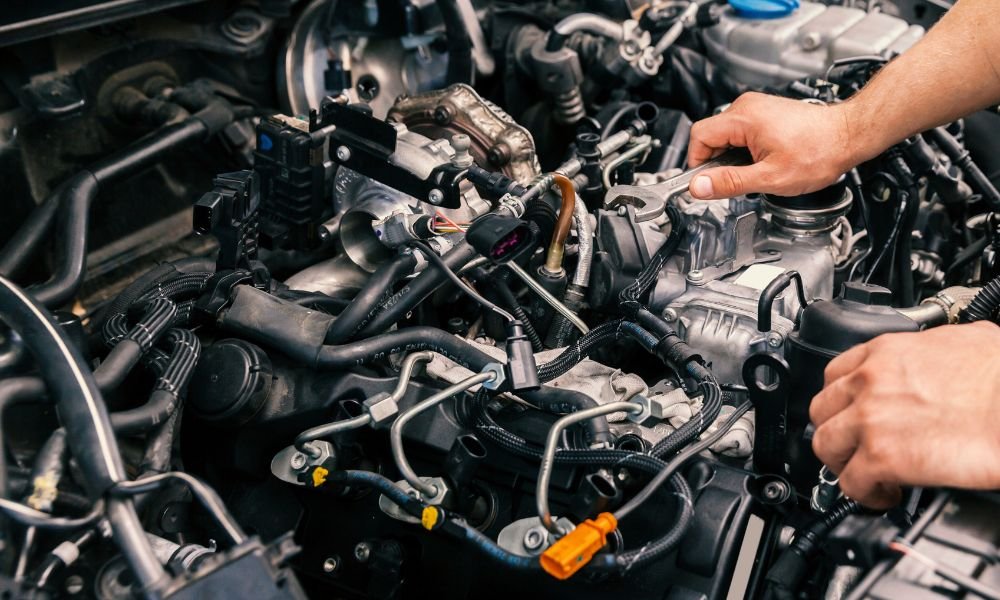
When a diesel engine starts losing power, burning through fuel faster than usual, or producing excessive smoke, the problem often isn’t a major mechanical failure. More often, the issue traces back to substandard replacement parts installed during routine maintenance.
Diesel engines are built for longevity. Commercial trucks, agricultural equipment, and industrial machines can run for hundreds of thousands of miles with proper care. But that durability depends on the quality of components used throughout the engine’s service life. Cheap parts might save money initially, but the long-term impact on engine efficiency can be costly.
How Diesel Engines Depend on Precision Engineering
Unlike gasoline engines that use spark plugs, diesel engines rely on compression ignition. Fuel gets injected into highly compressed air inside the combustion chamber, where temperatures climb high enough to ignite the fuel spontaneously. This process requires exact tolerances and precise timing.
Every component in a diesel system plays a specific role in maintaining this precision. Fuel injectors must atomize diesel into a fine mist at exact intervals. Filters need to trap contaminants without restricting flow. Turbochargers must spin at specific speeds to deliver the right amount of compressed air. When any of these components falls below specifications, the entire combustion process suffers.
Common Components Where Quality Matters Most
Certain diesel engine parts demand higher quality standards than others due to the extreme conditions they face.
Fuel Injectors
Fuel injectors are among the most critical precision components in any diesel engine. They operate under extreme pressures, often exceeding 30,000 PSI in modern standard rail systems, and must deliver fuel in quantities measured in milligrams.
Poor-quality injectors often exhibit inconsistent spray patterns. Instead of producing a fine, evenly distributed mist, they may create streams or droplets of varying sizes. This leads to incomplete combustion, wasted fuel, increased emissions, and carbon buildup inside the combustion chamber. Over time, that carbon accumulation can damage pistons, valves, and cylinder walls.
Cheap injector nozzles also wear faster. As nozzle openings erode, fuel delivery becomes increasingly inaccurate, and the engine management system struggles to compensate.
Filters and Filtration Components
Diesel fuel, oil, and intake air all require filtration before reaching critical engine parts. Filter quality directly affects how well they protect the engine while maintaining proper flow rates.
Inferior fuel filters often use lower-grade filter media that either let harmful particles pass through or restrict flow too aggressively. Particles as small as 4 microns can damage fuel injector components. If a filter fails to catch these contaminants, injector life drops dramatically. If it restricts flow too much, fuel pressure falls, and the engine loses power.
Air filters face similar issues. Poor-quality filters may not seal properly against their housings, allowing unfiltered air to bypass the element entirely. Even small amounts of dust entering the intake can accelerate wear on turbocharger bearings and cylinder walls.
Turbocharger Components
Modern diesel engines depend heavily on turbocharging for both power and efficiency. A turbocharger spins at speeds exceeding 150,000 RPM, and its bearings and seals must withstand the extreme heat generated by exhaust gases.
Aftermarket turbo components from questionable sources often use inferior metallurgy. Turbine wheels may not handle thermal stress as well as OEM-spec parts, leading to cracking or warping. Bearing materials may wear prematurely, causing shaft play that damages seals and allows oil to leak into the intake or exhaust.
When a turbocharger cannot maintain proper boost pressure, the engine compensates by injecting more fuel to meet power demands. Efficiency drops, exhaust temperatures rise, and the entire system operates under increased stress.
Gaskets and Seals
Gaskets and seals seem like simple, inexpensive components where brand doesn’t matter. But these parts face punishing conditions. Head gaskets must withstand combustion pressures and temperatures while maintaining a perfect seal between the block and cylinder head.
Low-quality gaskets may be made from composite materials that compress unevenly or degrade more quickly when exposed to heat and chemicals. Seal compounds might harden prematurely, losing flexibility and allowing leaks to develop. Even small leaks in a diesel system can affect combustion chamber pressure, coolant integrity, or oil circulation.
The Compounding Effect of Multiple Substandard Parts
One poor-quality component can degrade engine performance on its own. But real damage often happens when several marginal parts are installed together over time.
Consider an engine running cheap fuel filters that allow some contamination through. The injectors wear slightly faster than they should. A lower-grade air filter lets fine particles reach the turbo, causing minor bearing wear. Individually, each issue might seem minor. Combined, they create a cascade of reduced efficiency, increased fuel consumption, and accelerated wear across multiple systems.
An engine that might have lasted 500,000 miles reliably could require a major overhaul at 300,000 miles or less.
Recognizing the Warning Signs
Engines running on substandard parts often show symptoms gradually. Watch for increased black smoke under load, which indicates incomplete combustion. Pay attention to fuel economy trends over time. Notice if the engine works harder to produce the same power it once delivered efficiently.
Unusual turbo sounds like whining or grinding, suggesting bearing problems. Hard starting, especially in cold weather, can point to injector issues. Rising exhaust temperatures during regular operation often signal inefficient engine performance.
Making Informed Decisions for Long-Term Performance
Diesel engines represent significant investments, whether they power commercial trucks, construction equipment, farm machinery, or industrial applications. The parts chosen during maintenance and repairs directly influence how long that investment continues to deliver results.
Quality components manufactured to proper specifications maintain the tight tolerances diesel engines need to run efficiently. They resist wear, handle thermal stress, and perform consistently throughout their service life. While they may cost more upfront, they typically prove far more economical when measured against fuel savings, reduced downtime, and extended engine life.
Understanding how each component contributes to overall engine efficiency helps operators and maintenance professionals make better decisions about the parts they trust to keep their equipment running strong.