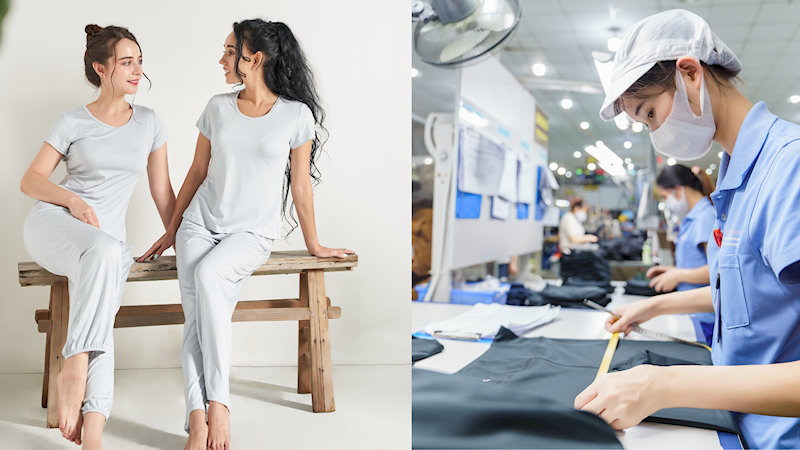
Quality is key when it comes to bamboo pajamas. From picking soft, breathable fabrics to thorough checks throughout production, knowing the common issues and QC checkpoints ensures your pajamas are comfortable, durable, and reliable. Choosing the right bamboo pajama manufacturer makes all the difference in delivering a product your customers will love.
Common Quality Issues in Bamboo Pajamas Manufacturing
Here’s a practical QC guide for bamboo pajamas, highlighting the common issues brands run into with manufacturers. Bamboo fabric feels incredibly soft and smooth, but it can be a bit “tricky” during production – stretching, twisting, or seam problems can happen if not handled carefully. Below are the key points you’ll want your factory to keep an eye on:
- Fabric & Shrinkage:Bamboo fabric is soft but highly prone to shrinkage. Make sure the factory pre-washes fabric samples and keeps shrinkage under 3-5%. Uneven handling during cutting or washing can also cause twisting in pants legs.
- Seam & Stitching:Bamboo is lightweight and slippery, making seam issues common. Ensure stitches are dense enough (10-2 SPI) and the right needle (small ball-point 65/9 or 70/10) is used to prevent seams from popping or fabric from tearing.
- Color Consistency:Different rolls of bamboo fabric can vary slightly in color. Check that trims, plackets, and pockets match the main fabric, and test dark colors for bleeding to avoid staining lighter areas after washing.
- Trims & Finishing:Small details make a big difference in perceived quality. Plackets should stay flat with thin interlining, collars and pockets must be symmetrical, and loose threads – especially inside where it touches skin must be trimmed.
- Size & Fit:Bamboo drapes differently, so garments can easily end up slightly larger or smaller than intended. Make sure to check the finished measurements against your size chart, allowing a tolerance of about one centimeter, and review samples before approving the full production run.
Bamboo fabric is soft but highly prone to shrinkage. Make sure the factory pre-washes fabric samples and keeps shrinkage under 3-5%
Key QC Checkpoints During Production
Producing high-quality bamboo pajamas requires careful quality control at every stage, from raw materials to the finished product. The unique properties of bamboo fabric softness, stretch, and eco-friendly certifications mean that thorough inspections are essential to maintain comfort, durability, and brand standards. QC checkpoints are divided into three main stages: pre-production, inline (mid-production), and post-production.
Pre-Production (Raw Material Inspection)
This stage ensures that only flawless materials enter the production process. Every roll of bamboo fabric, thread, buttons, and zippers is carefully examined for defects, such as holes, stains, knots, or uneven texture.
Color consistency is checked across all rolls and compared to the approved standard to avoid shading issues. Physical properties, including shrinkage, colorfastness, pilling resistance, and stretch recovery, are tested in the lab to ensure garments retain shape and quality after washing.
Accessories like zippers, buttons, and elastics are verified for proper function and alignment with approved samples. Additionally, brands should confirm that all raw materials meet certifications such as OEKO-TEX Standard 100 or FSC (if you request), ensuring safety and responsible sourcing. Finally, the Pre-Production Sample (PPS) is reviewed and approved to verify design specifications, measurements, and construction before mass production begins.
Inline/Mid-Production (Workmanship and Process Monitoring)
During production, regular QC checks help catch issues early and minimize waste. Fabric pieces are monitored to ensure cutting precision matches approved patterns for correct sizing and fit. Sewing operations are closely inspected to maintain consistent stitch density and seam strength, preventing seam failures during stretching, especially important for soft, stretchy bamboo fabrics.
Inspectors also check alignment, puckering, and the placement of logos or graphics to ensure garments are both comfortable and visually accurate. These inline checks allow brands to address defects immediately, keeping production on track while maintaining quality standards.
Post-Production (Final Inspection and Packaging)
Once garments are fully assembled, a thorough final inspection ensures that every piece meets brand expectations. Critical measurements such as chest width, garment length, and sleeve length are checked against the final measurement chart to confirm sizing accuracy.
The overall workmanship is reviewed for wrinkles, stains, loose threads, or other flaws, with the finished garment compared against the approved PPS. Labels and packaging are verified for accuracy and compliance, including size, care instructions, content, and brand labels. Finally, fasteners, elastic, and other components are tested for proper functionality, and garments are neatly folded and packaged, ready for shipment.
Critical measurements such as chest width, garment length, and sleeve length are checked against the final measurement chart to confirm sizing accuracy
Why Choosing the Right Bamboo Pajama Manufacturer Matters
Working with the right pajama manufacturer is important for turning your designs into high-quality bamboo pajamas. To achieve the best results, evaluate them based on three key aspects.
- Capability:A capable manufacturer will help you develop samples that meet your exact requirements while also being optimized for mass production. They understand the differences between sample-making and full-scale production, and know how to transfer technical notes so the final garments maintain consistent quality. Their experience ensures that designs are practical, cost-effective, and ready for large-scale manufacturing without compromising the brand’s vision.
- Professionalism:A professional manufacturer maintains strict QC systems at every stage from raw material inspection to in-line monitoring and final garment checks. They follow standardized processes to prevent errors, ensure consistent quality, and provide guidance to optimize production. Professionalism also shows in clear communication, adherence to timelines, and proactive advice that helps brands achieve the best results efficiently.
- Responsibility:A responsible manufacturer takes ownership when issues arise, providing solutions to fix problems quickly rather than placing blame. They work to keep production on schedule and maintain transparent communication with the brand. Responsibility also includes honoring commitments, handling adjustments or reworks when needed, and ensuring the final product meets both quality standards and customer expectations.
In conclusion, high-quality bamboo pajamas start with careful QC at every stage from raw materials to the finished garment. Choosing a manufacturer with capability, professionalism, and responsibility ensures consistent quality, smooth production, and garments your customers will love. With the right partner, your designs are accurately realized and delivered reliably every time.