A kitchen does more than store dishes and groceries. For many homeowners, it is the daily checkpoint where mornings start, pills are sorted, coffee is brewed, and news is read. Choosing a construction partner that treats this room as a mood engine, not just a work zone, changes how those small daily rituals feel.
With the right home remodeling company in Renton, WA, that listens first and draws later, lighting, layout, and finishes can quietly support the next twenty years of life instead of echoing the last twenty. Old playrooms can become calm hobby spaces, guest suites can welcome adult children without stress, and circulation between those rooms and the kitchen can feel smooth and predictable.
Why “Design for Dopamine” Matters After 50
Dopamine does not only react to drama and novelty. It responds to small wins, clear order, and a sense of safety. Recent work from the Harvard Joint Center for Housing Studies links aging in place with targeted home modifications in kitchens and baths, and shows that these projects are taking a growing share of the remodeling market. AARP’s 2025 livable communities research finds that most adults over 50 want to stay in their homes as they age, yet many still need to make their spaces safer and more accessible before that feels realistic.
Market data points in the same direction. The National Association of Home Builders expects remodeling activity to grow in 2025–2026, driven by an aging housing stock and homeowners with strong equity who prefer to adapt rather than downsize. For a couple in Renton, that turns a kitchen and main floor remodel into a practical health and mobility plan instead of a cosmetic upgrade.
Honeycomb Construction and similar teams work at this intersection of emotion, function, and aging. A nearby home remodeling partner that understands this context will ask about sleep, balance, and social life, not only cabinet colors.
From Playroom Chaos To Quiet Hobby Studio Or Guest Suite
Many houses still carry traces of child-focused design: paint, toy bins, futons. When kids are grown, those rooms can feel frozen. They are too bright for guests, too cluttered for serious hobbies, and too sentimental to ignore.
Here, it helps to think like a coach for the future you. A careful remodeling team can reshape that space so it feeds dopamine through calm progress instead of visual noise. Common moves include:
- Zoning the room into two quiet uses, such as a guest area and a hobby corner, with lighting and rugs that mark each zone instead of building hard walls.
- Adding built-in storage that hides clutter but keeps supplies close, so projects can start and end in a few minutes without a heavy lift.
- Upgrading sound insulation and door hardware to make the room feel separate enough for focused craft work, music practice, or remote calls when family visits.
These changes look modest on a floor plan. In daily life, they make it easier to start a painting, finish a quilt, or play guitar without stepping around old plastic toys. Honeycomb Construction treats these repurposed rooms as emotional buffers between the busy kitchen and the quieter parts of the house.
Kitchens That Welcome Adult Children And Future You
The kitchen remains the anchor. It is where adult children drop their bags, where grandchildren ask for snacks, and where future mobility limits will be felt first. Designing for dopamine here means reducing friction and surprise.
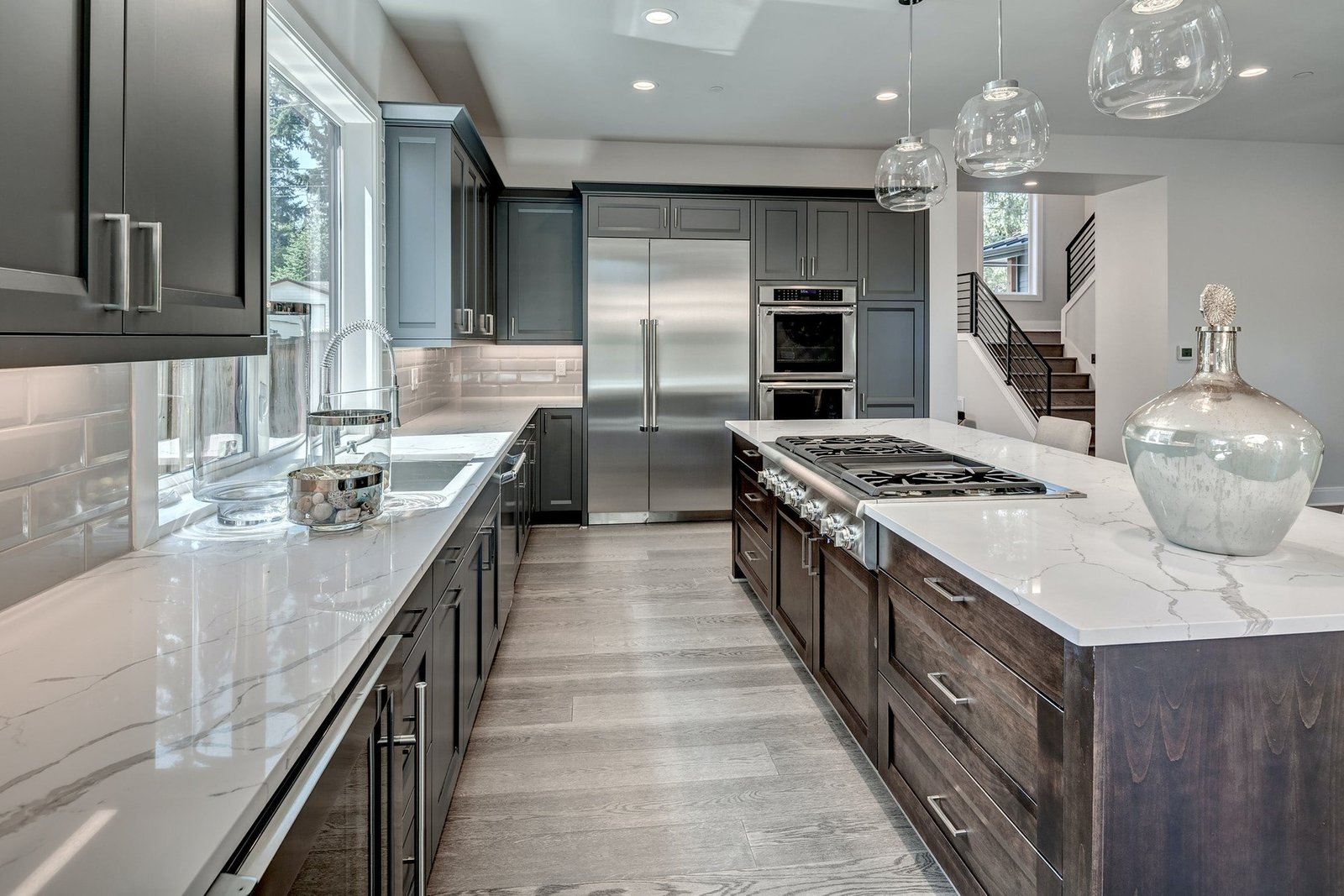
A skilled home remodeling company in Renton usually begins with circulation. Narrow walkways, sharp corners near the fridge, and crowded islands all add low-level stress. Widening clearances, switching some lower cabinets to drawers, and adding a prep surface near the sink can shorten steps and make hosting less tiring.
Appliance placement matters as much as finish choices. A wall oven set at standing height, an induction cooktop with clear controls, and a drawer dishwasher that does not require deep bending all support safer movement. When everyday tasks feel physically lighter, people tend to cook at home more often, which stabilizes eating habits and sleep schedules.
Color, texture, and light finish the picture. In Renton’s particularly long gray season, layered lighting can counter gloomy mornings: under-cabinet strips for tasks, soft ceiling fixtures for general glow, and a dimmer to lower brightness in the evening. Matte surfaces and warm neutrals reduce glare and visual fatigue. Small, repeated cues like a favorite accent color on bar stools and dish towels create a sense of continuity that the brain finds quietly rewarding.
Building A Calm Main Floor For Aging In Place
Guest suites and circulation routes are as important as the kitchen island. As adult children visit more often, a converted playroom with a nearby bath can become a small suite that preserves privacy for everyone.
At the same time, the main floor can be prepared gently for future needs. A thoughtful remodeling team will look for trip hazards, level changes, and tight turns. Smoothing thresholds between rooms, widening at least a few doorways, and planning for a no-step entry near the kitchen all reduce the risk of falls. Quiet structural steps, such as adding blocking in bathroom walls for future grab bars, cost little during a remodel and prevent expensive patchwork later.
Industry forecasts suggest that aging-in-place projects will stay strong over the next few years, supported by demographics and homeowner equity.
In the end, design for dopamine in a kitchen remodel is not about gadgets or dramatic reveals. It is about fewer painful twists, simpler daily choices, and rooms that invite small joys. When a home remodeling company like listens closely to how life actually feels at 6 a.m. on a winter weekday, the plan that follows can turn an aging house into a place that quietly supports mood, energy, and independence for a long time.