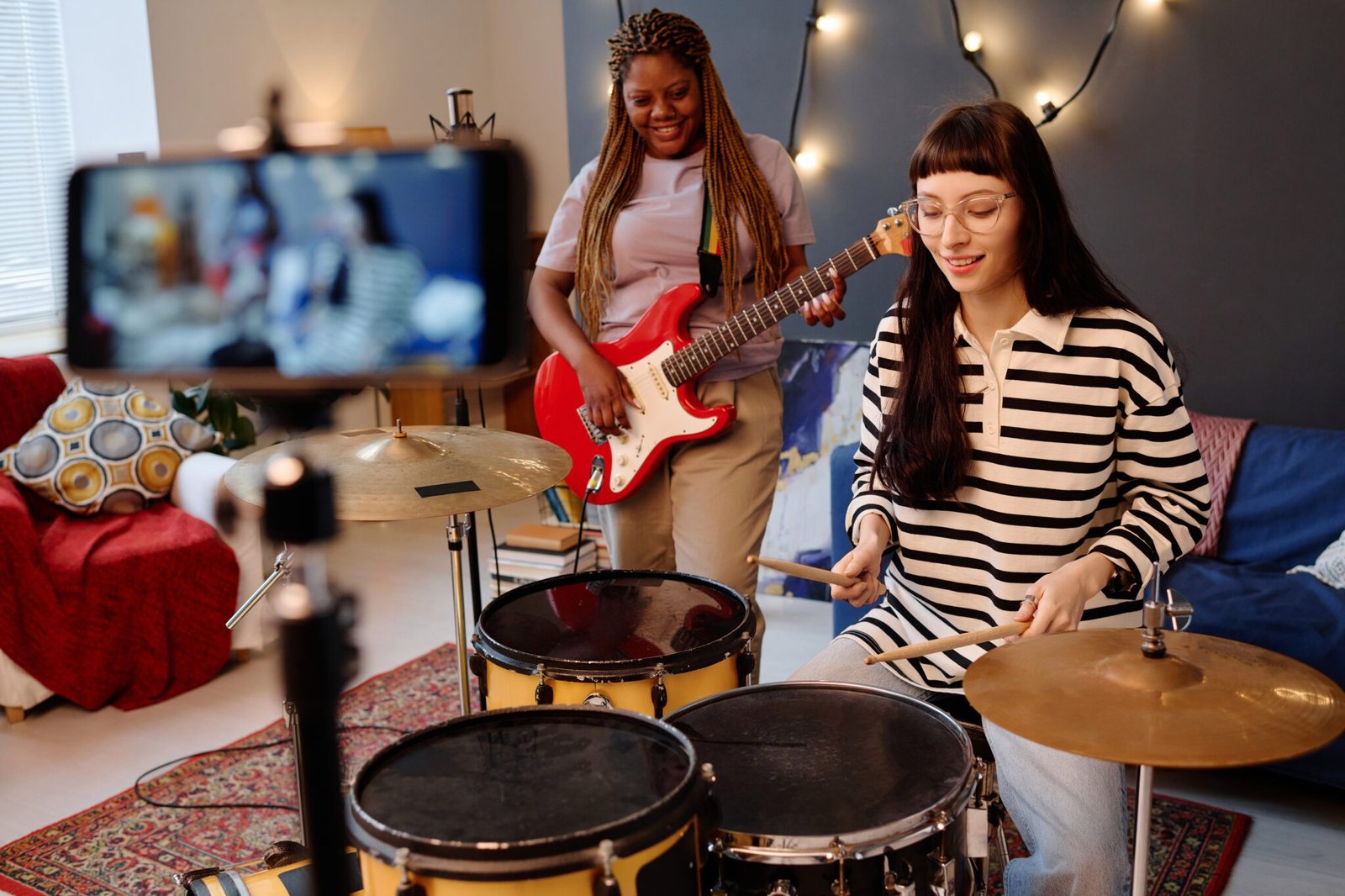
Drums seem intimidating at first glance sitting behind a full drum set with multiple limbs coordinating independent rhythms looks impossibly complex. Yet drums are one of the most rewarding instruments beginners can learn, and modern online drum classes have made starting your drumming journey more accessible than ever before. The barrier that once existed needing a soundproof space and finding qualified local instructors has completely dissolved.
Online drum lessons provide an excellent entry point for beginners because they offer flexible scheduling, one-on-one attention, immediate feedback on technique, and the ability to learn from experienced instructors regardless of your location. Whether you’re drawn to rock, jazz, pop, funk, or any other style, understanding what online drumming instruction involves helps you start with appropriate expectations and set yourself up for success. This comprehensive guide covers everything beginners need to know to begin their drumming journey confidently.
Why Online Drum Classes Work Well for Beginners
Learning to Coordinate Independent Limbs
Drums require coordination that differs fundamentally from most instruments. Your hands and feet work independently, often playing different rhythms simultaneously. This coordination seems impossible initially even watching experienced drummers play complex patterns feels bewildering. However, this is exactly why online drum lessons for beginners are so effective. Qualified instructors teach you to build independence progressively, starting with simple patterns and gradually increasing complexity.
Quality instruction provides:
- Step-by-step coordination development
- Exercises isolating individual limbs before combining them
- Systematic progression preventing overwhelming confusion
- Real-time feedback on coordination challenges
- Clear explanations of why exercises develop specific skills
Most beginners can coordinate basic patterns within 4-8 weeks of consistent practice. This early success creates enormous motivation because you’re immediately making recognizable rhythms.
Immediate Feedback on Technique
Proper drumming technique is crucial because poor habits developed early are difficult to correct. With drum set lessons online, your instructor watches your posture, grip, stick height, and movement patterns, providing immediate corrections that prevent injury and limit long-term progress. This real-time feedback prevents months of inefficient practice based on incorrect technique.
Personalized Progression
Every drummer develops at different paces. Online instruction allows instructors to adjust progressions matching your specific development speed. Someone naturally inclined toward rhythm may advance quickly while needing help with coordination. Quality instruction addresses your individual needs rather than forcing you through a generic curriculum.
Essential Equipment for Beginner Drummers
Understanding Your Equipment Needs
One common misconception is that you need an expensive full drum kit to begin learning. In reality, beginners can start with minimal equipment and expand as they develop skills and commitment. Understanding what you actually need prevents unnecessary spending while ensuring you have adequate tools for learning.
Starter Equipment Necessities
Getting started requires:
- Drum sticks: Affordable and essential for learning grip and technique
- Practice pad: A dedicated surface for practicing without a full kit (highly recommended)
- Metronome: Develops rhythm consistency and timing accuracy
- Drum throne or seat: Proper seating ensures correct posture from day one
- Basic instruction: Quality online drum classes provide structured learning
A practice pad, a simple pad designed specifically for drumming practice is invaluable for beginners. It’s affordable, takes minimal space, and allows practicing fundamental techniques without requiring a full drum set. Many drummers practice primarily on pads for the first several months.
When to Invest in a Full Drum Kit
After 2-3 months of consistent practice on a pad, many beginners feel ready for a full kit. At this point, you understand whether drumming truly interests you long-term and have developed enough technique to use a kit properly. Full kits range from affordable beginner models to expensive professional sets. Most beginners find mid-range acoustic kits adequate for years of learning.
Sound Considerations for Home Practice
Acoustic drums are potentially problematic for apartment living or practicing at night. Alternatives include:
- Electronic drums: Quiet, affordable, space-efficient; excellent for learning
- Mesh drums: Quieter than acoustic with better feel than pads
- Practice pads: Silent and sufficient for foundational skill development
- Noise-dampening materials: Reduce volume without eliminating acoustic feel
Online drum lessons for beginners work equally well with any of these options. Your instructor cares about your rhythm, coordination, and technique; the specific equipment matters less than your commitment to learning.
What Quality Online Drum Lessons Include
Structured Lesson Progression
Effective online drum classes follow logical progressions building skills systematically. Quality instruction includes:
- Assessment of your starting level and goals
- Foundational technique development (grip, posture, stick control)
- Progressive rhythm exercises building coordination
- Introduction to different drumming styles
- Regular progress evaluation and adjustment
- Integration of actual songs into your learning
This structured approach prevents the confusion of learning randomly and ensures steady development toward your goals.
Real-Time Feedback & Correction
An instructor watching you practice provides immediate feedback correcting:
- Improper grip limiting speed and causing tension
- Poor posture affecting endurance and control
- Unnecessary tension restricting movement
- Inefficient stick motions limiting power and speed
- Timing issues affecting rhythm consistency
This real-time correction prevents developing bad habits that compromise progress and require extensive correction later.
Personalized Practice Plans
Quality instructors provide specific exercises targeting your development needs between lessons. Rather than generic practice routines, these plans address your particular challenges. Someone struggling with coordination gets different exercises than someone working on speed development.
Essential Skills You’ll Develop
Building Solid Timing & Rhythm Foundation
Your first priority is developing rock-solid timing and the ability to stay consistent with a beat. This foundational skill underpins everything else. Early lessons focus heavily on:
- Understanding tempo and metronome work
- Recognizing different time signatures
- Developing consistent pulse and groove
- Reading rhythm notation
- Maintaining timing under pressure
Most beginners achieve competent timing within 8-12 weeks of consistent practice with online drum lessons.
Developing Hand Technique & Control
Proper hand technique determines your long-term potential. Quality instruction develops:
- Correct grip preventing tension and injury
- Proper stick control for power and finesse
- Rebound technique maximizing efficiency
- Single and double stroke rolls
- Finger techniques independent from wrist motion
- Control across dynamic range from soft to loud
Hand technique development typically requires several months of focused practice before you can really showcase the results on a full kit.
Coordinating Independent Limbs
The unique challenge of drumming independent hand and foot coordination requires systematic development. You’ll learn:
- Bass drum independence from hands
- Hi-hat foot control
- Kick drum patterns while playing hands
- Progressive coordination complexity
- Polyrhythmic concepts
- Syncopation and offbeat patterns
This coordination development progresses over months and years but begins immediately in drum set lessons online.
Structuring Your Practice Effectively
Daily Practice Recommendations
Consistent daily practice produces dramatically better results than sporadic longer sessions. Most teachers recommend:
- Beginners: 20-30 minutes daily minimum
- Early intermediate: 30-45 minutes daily
- Intermediate: 45-60 minutes daily
- Advanced: 60+ minutes daily depending on goals
Even 15-20 minutes of focused daily practice exceeds occasional longer sessions because your nervous system requires consistent stimulus to develop coordination.
Efficient Practice Strategies
Quality practice matters more than quantity. Structure your sessions:
- Warm-up (5 minutes): Grip exercises and simple patterns building into your practice
- Technical work (10 minutes): Focused on current challenges or new techniques
- Groove practice (10 minutes): Applying techniques to actual drumming patterns
- Song practice (5+ minutes): Learning complete songs or sections
This structure ensures you’re always addressing current needs and applying learning to actual music.
Using a Metronome
The metronome is your best friend for timing development. Practice all exercises with metronome guidance, starting at comfortable tempos and gradually increasing speed. Metronome practice develops the consistent timing that defines professional drummers.
Common Beginner Mistakes to Avoid
Rushing Coordination Development
Many beginners try complex patterns before mastering fundamentals. This creates frustration rather than progress. Quality instruction ensures you master coordination basics before advancing. Patience now prevents months of struggling with improper foundations later.
Neglecting Proper Technique
Skipping technique development for playing songs seems fun initially but compromises long-term progress. Proper grip, posture, and stick control feel awkward initially but become automatic with practice. Investing in technique early it’s non-negotiable for developing speed, endurance, and control.
Inconsistent Practice
Three-hour weekly sessions vastly underperform 30 minutes daily practice. Your nervous system needs consistent stimulus. Missing weeks between practice sessions sets progress back significantly. Treat drumming practice like brushing teeth, something you do daily, not when you remember.
Ignoring Rhythm Fundamentals
Some drummers want to jump to complicated patterns without mastering basic grooves. Understanding fundamental rhythms quarter notes, eighth notes, sixteenth notes is essential. Online drum lessons for beginners emphasize this because rhythmic fluency underlies everything.
Overcoming Online Learning Challenges
Addressing Sound & Space Issues
Limited space or sound concerns are legitimate challenges. Solutions include:
- Starting with practice pads requiring minimal space
- Using electronic drums for quiet practice
- Practicing during appropriate hours
- Setting up a dedicated practice space
- Communicating with neighbors about practice schedules
- Exploring noise-dampening options
Your instructor can help adapt lessons around your specific space constraints.
Maintaining Motivation
Some beginners lose motivation when progress feels slow. Maintaining motivation requires:
- Setting specific achievable goals
- Celebrating small milestones
- Learning songs you genuinely enjoy
- Recording practice sessions to hear improvement
- Connecting with other drummers
- Remembering that all drummers experienced this learning curve
Technical Issues with Online Lessons
Stable internet and video quality matter for effective online instruction. Ensure:
- Reliable internet connection
- Adequate camera positioning showing your hands and posture
- Good lighting so your instructor can see details
- Quiet space minimizing background noise
- Quality audio allowing clear communication
These technical foundations prevent instruction issues unrelated to your actual drumming.
Conclusion
Starting drums with online drum classes is an exciting, achievable goal that opens doors to making real music quickly. Contrary to appearances, drumming is learnable with proper instruction and consistent practice. Within weeks, you’ll play recognizable rhythms. Within months, you’ll play complete songs confidently.
The key to success is beginning with realistic expectations, investing in quality instruction, maintaining consistent daily practice, and celebrating progress along the way. Your drumming journey is unique, don’t compare your progress to others. Instead, focus on steady improvement and the genuine joy of creating rhythm and music.
The drums are waiting. With the right online instruction and commitment to practice, you’ll be amazed at what you accomplish within your first year of learning.
FREQUENTLY ASKED QUESTIONS
Do I need a full drum set to start online drum lessons for beginners?
No. Practice pads are excellent for beginners and sufficient for developing fundamental techniques for several months. Electronic drums or mesh pads are alternatives if space or sound concerns exist. Most beginners use pads exclusively for the first 2-3 months before investing in full acoustic kits. Your instructor works with whatever equipment you have. The priority is developing technique and rhythm; the specific equipment matters less.
Can I really learn drums online as effectively as in-person lessons?
Yes. Modern video technology allows instructors to see your posture, hand position, and technique clearly. You receive real-time feedback and immediate corrections. Many students actually progress faster online because they can rewatch lessons, practice anytime, and eliminate travel time. The platform matters less than your practice consistency and instructor quality. Drum set lessons online from qualified teachers work excellently.
What equipment do beginners absolutely need?
Essential items include drum sticks (affordable), a practice pad (invaluable for building fundamentals), a metronome or metronome app (developing timing), proper seating (correct posture from day one), and quality instruction. You don’t need a full drum kit initially. Many beginners practice exclusively on pads for months before investing in kits. This gradual approach prevents unnecessary spending while confirming your commitment.
How much daily practice should I do as a beginner?
Twenty to thirty minutes of focused daily practice produces excellent progress. This beats sporadic longer sessions because your nervous system requires consistent stimulus developing coordination. Most teachers recommend a minimum 30 minutes daily for meaningful progress. The key is consistency, practicing daily at moderate duration vastly outperforms occasional marathon sessions.