Modern households operate under constant pressure. Work schedules are longer. Commutes are unpredictable. Family responsibilities compete with personal time. In cities like Singapore, where daily life moves quickly and living spaces are compact, maintaining balance at home is becoming more challenging.
Balance does not come from perfection. It comes from flexibility. Homes that function well today are not the ones that look flawless, but the ones that adapt easily to changing routines. Flexible home routines allow households to respond to busy periods, unexpected disruptions, and life transitions without creating ongoing stress.
A balanced home environment supports mental clarity, emotional well-being, and smoother daily living. When routines are realistic and adaptable, the home becomes a place of recovery rather than another source of pressure.
Why rigid routines often fail
Traditional household routines are often built around fixed expectations. Cleaning schedules are strict. Responsibilities are evenly divided on paper but not always in reality. When life changes, these rigid systems struggle to keep up.
Missed routines tend to create guilt rather than solutions. A skipped cleaning day becomes a source of tension. A busy work week leads to visible disorder, which then adds to mental fatigue. Over time, this cycle can cause frustration rather than balance.
Rigid routines also fail to account for different energy levels. Some weeks are manageable. Others are not. A system that does not allow flexibility quickly becomes unsustainable.
Flexible routines, on the other hand, adjust based on time, energy, and circumstances. They focus on maintaining comfort rather than enforcing strict order.
The connection between flexibility and mental well-being
Mental well-being is strongly influenced by environment. When a home feels manageable, the mind feels lighter. When household tasks pile up, mental stress often follows.
Flexible routines reduce decision fatigue. Instead of constantly choosing what must be done immediately, households rely on adaptable priorities. Tasks shift based on urgency rather than habit. This reduces internal pressure and prevents small issues from becoming overwhelming.
In Singapore homes, where space is limited and schedules are demanding, flexibility allows residents to maintain control without feeling constrained. A home that supports mental well-being does not demand constant attention. It responds to the people living in it.
Shared spaces require adaptable systems
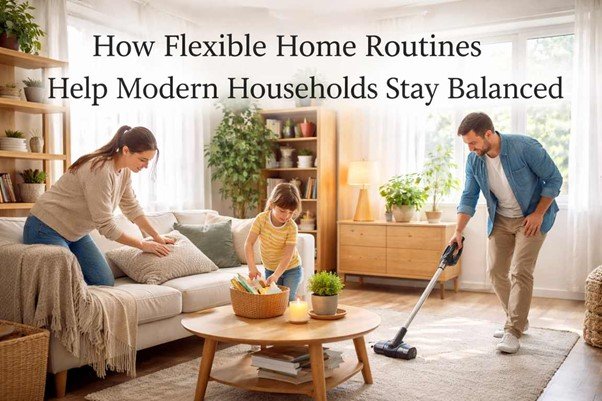
Living rooms, kitchens, and dining areas are shared by everyone in the household. These spaces experience the most activity and accumulate mess faster than private areas. Flexible routines are especially important here.
Rather than enforcing strict daily resets, many households benefit from lighter, more frequent adjustments. Quick resets at convenient times keep shared spaces functional without consuming large blocks of time. This approach supports cooperation rather than conflict.
When shared spaces remain usable, daily interactions feel smoother. Meals are less rushed. Conversations are less distracted. The home feels more welcoming.
Disagreements about cleanliness often stem from unrealistic expectations. Flexible systems reduce friction by acknowledging that households are dynamic, not static.
Urban living increases the need for flexibility
Urban environments place unique demands on households. Apartments are smaller. Storage is limited. Noise and external stressors are common. These factors amplify the impact of disorder at home.
In Singapore, where many residents balance professional commitments with family responsibilities, flexibility becomes essential. Homes that operate on rigid systems struggle to absorb daily disruptions. Flexible routines allow households to adjust without losing balance.
Urban living also involves frequent transitions. Residents move more often. Renovations are common. Tenancy changes are part of everyday life. A home routine that adapts easily to these transitions provides stability during change.
Trust and reliability in household support
Flexibility does not mean handling everything alone. Many modern households rely on external support to maintain balance. The key factor is reliability.
When support is consistent, households experience less anxiety. Knowing that certain tasks are handled properly allows residents to focus on work, family, and rest. This sense of reliability contributes directly to peace of mind.
In Singapore, discussions around maintaining home balance often reference services such as SG House Cleaning when exploring how households manage responsibilities without overwhelming their schedules. The emphasis is not on outsourcing everything, but on creating systems that support sustainable living.
Trust allows flexibility to work. Without it, routines become fragile and stressful.
Life transitions test household routines
Life transitions are where rigid routines break down most clearly. Moving, renovations, job changes, and family adjustments disrupt established patterns. Flexible routines absorb these disruptions more effectively.
One common transition is the end of a rental period. Packing, cleaning, inspections, and handovers often happen within tight timelines. Stress levels increase quickly. A flexible approach helps prioritise tasks without panic.
During these moments, support systems play a crucial role. A proper post tenancy cleaning service helps households manage transitions smoothly by addressing final cleaning requirements without adding unnecessary strain. This allows residents to focus on moving forward rather than managing last-minute pressure.
Transitions highlight the importance of adaptable systems. Homes that recover quickly after disruption restore balance faster.
Clean environments support emotional stability
A clean living environment contributes to emotional stability, but only when cleanliness is maintained realistically. Extreme standards often create more stress than comfort.
Flexible routines allow cleanliness to serve its purpose. Instead of chasing perfection, households maintain functional order. This supports emotional regulation by removing constant reminders of unfinished tasks.
Emotional stability improves when the home feels predictable. Flexible routines provide that predictability without rigidity. Residents know what to expect, even when schedules change.
This balance is especially important in shared households. When expectations are flexible and communicated clearly, relationships remain healthier.
Flexibility supports long-term sustainability
Sustainable routines are those that can be maintained over time. Many households begin with ambitious systems that eventually collapse. Flexible routines evolve gradually and adapt to changing needs.
Sustainability requires honesty. Not every household can maintain the same level of upkeep every week. Flexible systems acknowledge this reality and adjust accordingly.
In Singapore’s fast-paced environment, sustainability is essential. Homes that rely on rigid standards often experience burnout. Flexible routines protect against this by prioritising well-being over appearances.
A sustainable home environment feels supportive rather than demanding.
The role of prioritisation in flexible routines
Flexibility works best when paired with clear priorities. Not all tasks carry equal importance. Identifying what truly matters helps households allocate time and energy wisely.
Safety, hygiene, and comfort usually take precedence. Aesthetic details can wait. Flexible routines allow households to focus on what maintains balance rather than what looks impressive.
This approach reduces unnecessary stress. It also prevents minor issues from escalating into major disruptions.
Prioritisation transforms flexibility into structure without rigidity.
Balance improves relationships at home
Household stress often affects relationships. Tension builds when routines feel unfair or unrealistic. Flexible systems reduce this tension by allowing adjustment rather than blame.
When routines adapt to individual schedules, household members feel understood. This supports cooperation rather than conflict. Flexibility creates space for communication and compromise.
Balanced homes are not silent or perfectly organised. They are responsive. They adjust when needed and recover quickly after disruption.
Healthy relationships thrive in environments that support rather than constrain.
Creating routines that grow with the household
Households change over time. Children grow. Work patterns shift. Living arrangements evolve. Flexible routines grow alongside these changes.
A routine that works today may not work next year. Flexibility allows households to reassess without guilt. This ongoing adjustment keeps the home aligned with real needs.
In Singapore, where life stages often change quickly, adaptability is essential. Homes that grow with their residents maintain balance more effectively.
Flexibility is not a weakness. It is a strength.
A balanced home supports daily resilience
Daily resilience depends on environment. A home that absorbs stress rather than amplifies it supports recovery. Flexible routines contribute to this resilience by preventing overload.
When routines adapt to busy days, residents return home to a space that restores energy. This restoration improves focus, mood, and overall well-being.
Balance is built through small, consistent adjustments. Flexible routines make these adjustments possible without disruption.
Living well through adaptability
Modern households do not need stricter rules. They need systems that respond to real life. Flexible home routines support balance by aligning expectations with reality.
In urban environments like Singapore, adaptability is key to sustainable living. Homes that support flexibility provide peace, clarity, and emotional stability.
A balanced household is not defined by how much is done, but by how well it supports the people within it. Flexible routines allow homes to function as living spaces, not performance spaces.
That is where balance truly begins.