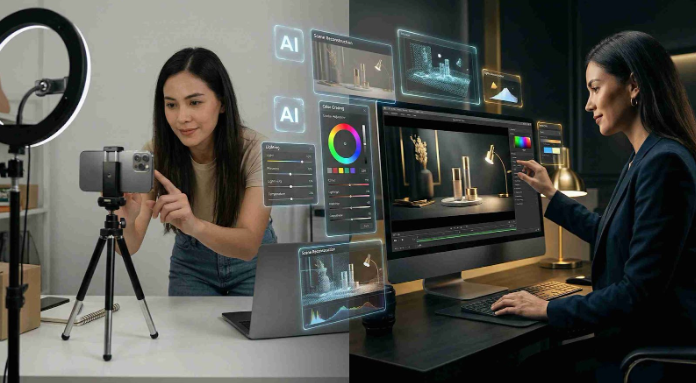
In a time when the world is changing very fast and digital engagements are deeply increasing, the emergence of virtual influencers has raised serious questions: can the charm and genuineness of human content creators be replaced by a machine-generated avatar? Virtual influencers are computer based personalities which can make posts, communicate and advertise brands on the social network sites just like a normal human being. To marketers and others who want to be creative, this dynamic is very vital to grow your audience effortlessly and keep in a competitive world. With the development of new technologies, the boundaries between the real and the online self are becoming difficult to draw, establishing both opportunities and issues concerning the influencer economy.
The Rise of Virtual Influencers
Virtually influencing, commonly AI-driven and created with 3D modeling tools, followings are populating such services as Instagram, TikTok, or YouTube. These digital personas do not get tired, work 24/7, unlike human creators, and can be carefully designed to suit the brand aesthetics. Such brands as Balmain and Prada have already partnered with virtual avatars and it has already proved that they can reach audiences in different countries of the world. The beauty is in accuracy: all posts, responses, and interactions can be manipulated and shaped to have the best results.
In terms of EEAT, virtual influencers provide a special case of authority and credibility. Although they will not be able to experience life, their content can be supported by teams of experts that can guarantee accuracy, style, and relevance. In the case of such industries as fashion, technology, and gaming, these avatars offer a uniform and aesthetically appealing presence, which human developers cannot always sustain at times.
Human Creators: Authenticity at Its Core
Though virtual influencers are a technological wonder, there is one aspect that human creators have an inimitable edge: authenticity. The worshippers not only associate with material but with the lives, feelings, and flaws of the person. This emotional appeal creates trust, which is a pillar of EEAT ideology. Human influencers tend to tell their own stories, struggles, and accomplishments, which bring about communities based on relatability and credibility.
Additionally, human designers will be able to adopt intuitively to trends, organically react to responses of the audience, and establish authentic partnerships. Their experience and practice make them experts and their content seems personal and authoritative. Lifestyle, wellness, and education are the industries that the subtle knowledge human influencers provide enjoy the advantage of.
Comparing Engagement and Reach
The participation measures are vital in assessing impact. Visual appeal and novelty sometimes virtual influencers can be a high-achieving strategy, resulting in the initial engagement spikes. Nevertheless, research indicates that the loyalty of the audience in the long run is expected to be directed to human creators, whose narrations and authentic communication develop long-term relationships.
Social proof is also effective in the case of human influencers, such as direct communication and approval in real life that builds trustworthiness. Conversely, virtual avatars are based on design, scripting, and algorithmic optimization to stay relevant. Though AI-based analytics may be used to steer virtual influencers into viral possibility, it is human feeling that makes human creators have an advantage in the area of meaningful interaction.
The Hybrid Future: Collaboration Between Virtual and Human Influencers
The future will give hybrid approaches an advantage instead of the straight-up competition. Lots of brands are investigating the concept of campaigns in which human creators work with virtual avatars, merging the real world with the digital one. This strategy builds on the advantages underlying the two worlds, in which human beings create relatability and trust, whereas virtual influencers create creativity, scalability, and original images.
This two-fold strategy would transform audience interaction to content strategists and marketers. AI-based content creation, influencer analytics, and immersive media experiences tools enable creators (both virtual and human) to enhance their reach effectively.
Conclusion
People should not argue about the replacement of virtual influencers and human creators but recognize their complementary advantages. Real influencers are experts in authenticity, emotional appeal, and experience of life, whereas virtual influencers are experts in innovation, consistency, and accuracy. To succeed strategically in the coming decade, the combination of both types of influence will probably be a success factor among the brands and creators who want to succeed. The influencer landscape can stay on the course of development and stay credible and authoritative by adopting the hybrid strategies, incorporating AI tools, and focusing on audience connection.