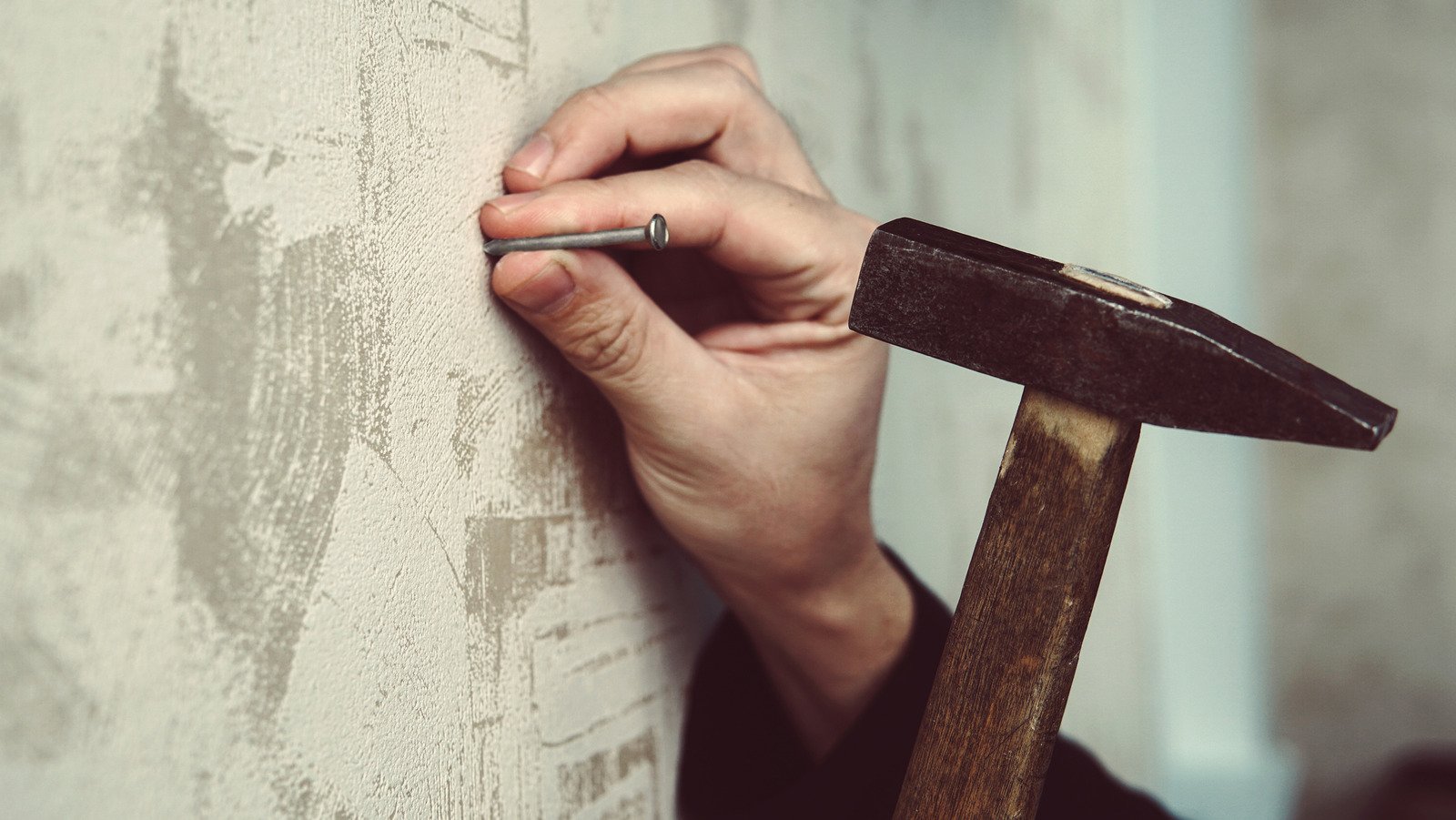
There is an undeniable romance to owning a historic home. Buyers eagerly seek out original hardwood floors, stained glass windows, and intricate crown moldings. But the romance usually ends the exact moment the new homeowner picks up a hammer, a nail, and a framed piece of art, and approaches the living room wall.
With one tap of the hammer, a spiderweb of jagged cracks suddenly shoots outward from the nail. A chunk of the wall crumbles to the floor as white dust fills the air. The art remains unhung, and the homeowner is left staring at a repair bill that will require a specialized tradesperson to fix.
This is the frustrating reality of lath and plaster. As more millennials and design enthusiasts purchase older, character-rich homes, they are quickly discovering that modern hanging hardware is completely incompatible with historical construction. To preserve their walls, they are abandoning the hammer and rediscovering a brilliant, centuries-old architectural feature that has been hiding in plain sight.
The Physics of Plaster Failure
To understand why a simple nail is so destructive, you have to look inside the wall. Modern homes are built using drywall—large sheets of compressed gypsum wrapped in paper. You can easily drive a screw or a hollow-wall anchor into drywall because the material is relatively forgiving and uniform.
Homes built before the 1940s, however, used lath and plaster. Builders would nail thousands of thin, horizontal wooden strips (laths) across the wall studs. Then, they would trowel multiple coats of wet plaster over the wood. The wet plaster would ooze between the wooden strips, drying into hard, bulbous “keys” behind the wall that locked the entire structure together.
Over a century later, this plaster is incredibly brittle. When you drive a nail into it, the blunt force shockwaves break those hidden plaster “keys” off the wood lath. Once the keys break, the plaster loses its grip on the wall and begins to sag, bulge, and crack. What starts as a tiny nail hole can quickly compromise a massive section of the wall.
The Forgotten Architectural Masterpiece
Victorian and Craftsman builders knew exactly how brittle their walls were. They knew homeowners would want to hang heavy oil paintings and ornate mirrors, so they engineered a built-in solution: the picture rail.
If you walk into a historic home and look about an inch or two below the ceiling (or just under the crown molding), you will often see a continuous strip of rounded wood trim circling the entire room. For decades, modern homeowners assumed this was just a quirky decorative accent, or a poorly placed chair rail.
In reality, it is a structural load-bearing rail anchored directly into the wall studs, specifically designed to hold the weight of everything in the room.
The Mechanics of Suspension
Instead of breaching the wall’s surface, the historic method relies on gravity and suspension. The system works through a brilliant, non-invasive mechanism.
To hang a piece of art, you simply hook a picture molding hanger over the curved top of the wooden rail. Because the rail runs the entire length of the room, you can place this hook anywhere you want. From that hook, you drop a vertical suspension line—historically a silk cord, but today, usually a sleek stainless steel cable or a rigid brass rod. Your framed art is then attached to this vertical cable using an adjustable gripper that slides up and down.
The weight of the heavy mirror or painting is transferred away from the fragile plaster face and distributed evenly across the heavy-duty wooden rail at the ceiling.
Dynamic Curation Over Static Placement
Beyond preserving the plaster, reverting to this historic hanging method offers a massive advantage in interior design: total fluidity.
When you use a hammer and nail, your art is static. If you buy a new painting that is slightly larger than the old one, you have to pull the nail, patch the hole, sand the wall, paint it, and hammer a new nail two inches higher.
With a suspension system, your walls become a dynamic gallery. If you want to move a painting three feet to the left to make room for a new bookshelf, you simply slide the top hook down the rail. If you want to raise a photograph to eye level, you squeeze the adjustable gripper and slide it up the cable. You can completely redesign a gallery wall in ten minutes, perfectly aligning frames without ever touching a tape measure, a drill, or a level.
Protecting the Past
The revival of the picture rail proves that sometimes, the best technological solutions were invented over a hundred years ago. By understanding the materials that make up historic homes and utilizing the suspension systems built into their very architecture, homeowners can fiercely protect the integrity of the past while still beautifully displaying the art of the present.