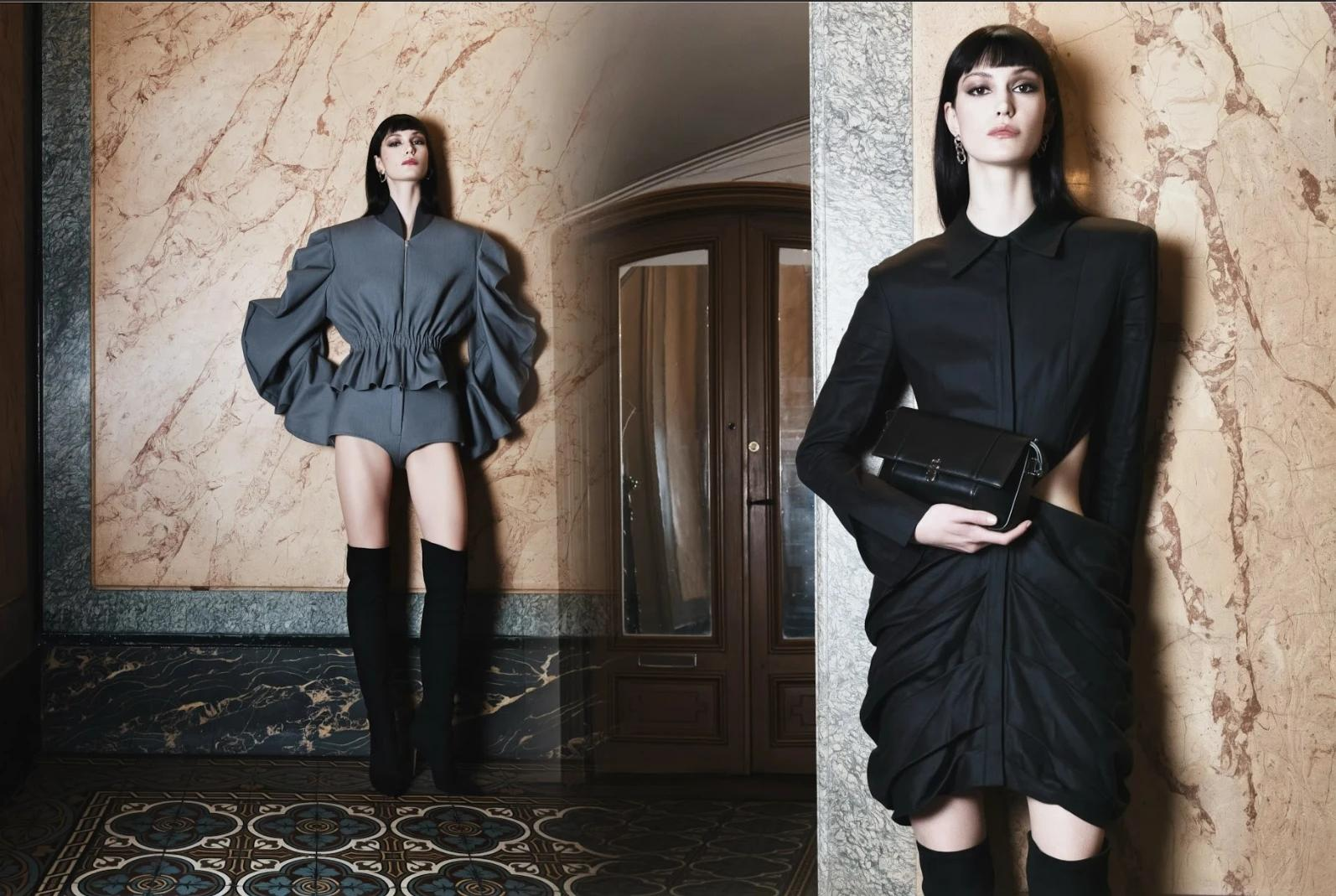
Modern femininity is no longer defined by fragility or restriction. It is defined by intention: the choice to move through the world with clarity, strength, and softness at once. The contemporary dress reflects this shift. It borrows the precision of tailoring and the purity of line, yet refuses stiffness for its own sake. It is designed to follow the body, not to fight it – an elegant architecture built for real life. In this context, high fashion dresses become less about spectacle and more about presence: pieces that hold shape while allowing the wearer to breathe, speak, and act.
Structure as Confidence, Not Constraint
Structure can be misunderstood as something severe, but in the best design it is a quiet form of support. A disciplined seam, a controlled shoulder, a clean waistline – these are not “rules,” they are tools that create balance. When the pattern is thoughtful, the dress becomes a frame that amplifies individuality rather than masking it. The result is confidence without noise: a silhouette that looks composed from every angle, and feels composed from within.
This is why modern couture language increasingly favors restrained drama, volume that is engineered, not excessive; cutouts that are deliberate, not distracting; details that reward attention, not demand it. The dress becomes a statement through proportion and construction, not through decoration alone.
Movement as the Measure of Luxury
True luxury reveals itself in motion. Fabric is not simply chosen for how it photographs, but for how it behaves: how it falls, rebounds, and catches light while walking. Movement tests every decision: hem length, lining, slit placement, tension at the bodice. A dress that looks perfect only when standing still is incomplete; modern femininity asks for garments that perform with the body, in the rhythm of an actual day.
That performance can be subtle: a skirt that releases with each step, sleeves that allow the arms to lift without pulling, a waist that shapes without tightening. These are the invisible standards of refined design. The wearer should not have to negotiate with the garment. Instead, the garment should collaborate.
Minimalism with Meaning
Minimalism today is not emptiness – it is editing. It is the decision to remove what is unnecessary so what remains can be exceptional: a line, a cut, a texture, a single accent placed with precision. This approach respects the wearer’s personality and gives space for styling, mood, and context. It also resists the cycle of disposable trends by prioritizing longevity and versatility.
Where pieces are selected more carefully and worn more intentionally, this mindset becomes essential. SAGIO embraces this philosophy through clean architecture, modern tailoring, and a calm, confident femininity that is designed to last beyond a season.
The Dress as Modern Ritual
A dress can still be transformative, but the transformation is different now. It is not about becoming someone else; it is about becoming more oneself. The most compelling modern dresses are built like a second skin with a backbone, structured enough to feel elevated, fluid enough to feel free. They translate the wearer’s inner clarity into outer form, turning daily movement into a quiet kind of ceremony.