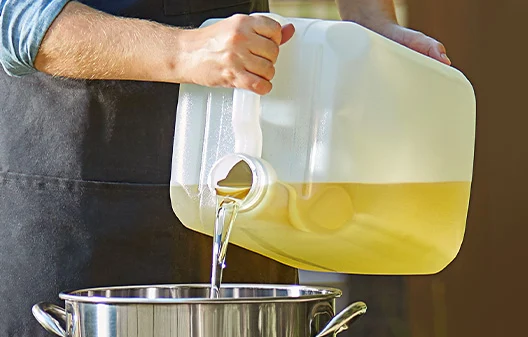
For restaurants, frying oil is not just another kitchen supply. It directly affects food taste, texture, consistency, operating costs, kitchen efficiency, and even customer perception of the brand. Whether a business serves fries, chicken, seafood, donuts, tempura, or fried appetizers, the quality of restaurant frying oil can determine whether the final product is crisp and flavorful or greasy and inconsistent.
Buying wholesale frying oil can be a smart decision for restaurants, caterers, food trucks, hotels, and commercial kitchens that use fryers every day. However, purchasing in larger volumes requires more than simply choosing the lowest price. The right decision depends on oil type, smoke point, flavor profile, packaging, storage conditions, delivery reliability, filtration practices, and total cost per fry cycle.
Before committing to bulk fryer oil, restaurant operators should understand what matters most in professional frying and how to evaluate suppliers properly.
Why frying oil quality matters
Frying is a high-temperature cooking method, usually performed between 325°F and 375°F. At these temperatures, oil is not just a heat transfer medium. It becomes part of the food experience. Good fryer oil helps create a golden exterior, proper crunch, and clean flavor. Poor-quality or degraded oil can cause dark coloring, bitter taste, excessive greasiness, smoke, unpleasant odors, and shorter fryer life.
Oil also influences consistency. A restaurant may have a great recipe, but if the fryer oil breaks down quickly or varies from shipment to shipment, the food will not taste the same every day. For high-volume kitchens, consistency is a commercial requirement, not a preference.
That is why wholesale purchasing should never be based only on the price per gallon. A cheaper oil that degrades faster may cost more in the long run because it must be replaced more often, produces lower-quality food, and increases waste.
Common types of fryer oil for restaurants
Different kitchens need different oils. The best choice depends on menu, frying temperature, food volume, and desired flavor.
Canola oil is one of the most common choices because it has a neutral taste, good frying performance, and wide availability. It works well for fries, chicken, vegetables, and general-purpose frying.
Soybean oil is also widely used in foodservice. It is usually cost-effective and suitable for many commercial frying applications, though it may not last as long as some high-stability oils under intense use.
Sunflower oil, especially high-oleic sunflower oil, is valued for its clean flavor and better heat stability. It can be a good option for restaurants that want a lighter taste and premium positioning.
Peanut oil is popular for certain cuisines and fried chicken concepts because of its high smoke point and distinctive performance. However, allergy considerations and labeling requirements should be taken seriously.
Palm oil and palm-based blends are used in some commercial kitchens because of their stability and long fry life. Restaurants should consider customer expectations, sustainability certifications, and local market preferences before choosing this option.
Blended oils are also common. Many suppliers offer customized or standard blends designed to balance cost, stability, flavor neutrality, and fry life.
What to check before buying wholesale frying oil
When purchasing wholesale frying oil, restaurants should look beyond the product name and review the actual specifications. Important factors include smoke point, oxidative stability, flavor neutrality, packaging size, shelf life, and whether the oil is suitable for deep frying.
Smoke point is important because oil must tolerate high cooking temperatures without excessive smoking or rapid degradation. However, smoke point alone does not tell the full story. Stability under repeated heating is just as important in a commercial fryer.
Flavor profile should match the menu. A neutral oil is usually preferred when one fryer is used for multiple products. A more distinctive oil may work for specialized menus but can create flavor transfer if used across different foods.
Packaging also matters. Bulk frying oil may be supplied in jugs, cases, drums, totes, or through a direct oil management system. Smaller restaurants may prefer cases or containers that are easier to handle, while high-volume kitchens may benefit from bulk delivery systems that reduce labor and packaging waste.
Delivery reliability is another critical issue. Running out of fryer oil during service can disrupt operations. A dependable supplier should provide predictable delivery schedules, emergency support, clear pricing, and consistent product quality.
Understanding total cost, not just unit price
Many restaurants compare fryer oil based on price per gallon, but this can be misleading. The more useful metric is cost per usable frying hour or cost per portion served.
A higher-quality oil may have a higher purchase price but last longer, produce better food, and require fewer oil changes. This reduces waste, labor, downtime, and disposal costs. On the other hand, a low-cost oil that breaks down quickly can increase operating expenses while damaging food quality.
Restaurants should track oil performance in real conditions. Useful indicators include how long the oil maintains color and clarity, how quickly it develops odor, how much foaming occurs, whether fried food becomes greasy, and how often staff need to change the oil.
For high-volume operations, even a small improvement in oil life can generate meaningful savings over time.
Storage and handling best practices
Buying bulk fryer oil only makes sense if the restaurant can store and handle it correctly. Oil should be kept in a cool, dry place away from direct light, heat, and moisture. Exposure to air, light, and high temperatures accelerates oxidation and reduces shelf life.
Containers should remain sealed until use. Staff should avoid mixing fresh oil with heavily degraded oil unless the kitchen has a controlled top-off process. Water, food particles, salt, and cleaning chemicals should never enter oil storage containers or fryers.
Proper handling also improves safety. Large containers can be heavy and difficult to pour. Restaurants should consider pumps, transfer systems, or supplier-managed bulk oil solutions if manual handling creates risk for employees.
Filtration, fryer maintenance, and oil life
The best fryer oil will still fail quickly if the kitchen does not manage it properly. Filtration is one of the most important practices for extending oil life. Food particles left in the fryer continue to burn, darken the oil, and create off-flavors.
Restaurants should filter oil regularly based on volume and menu type. Breaded products, heavily seasoned items, and foods with high moisture content can shorten oil life faster than plain fries or lightly coated items.
Fryer temperature control is equally important. Overheating oil accelerates breakdown. Staff should avoid setting temperatures higher than necessary and should turn down or cover fryers during slow periods when appropriate.
Cleaning schedules also matter. Carbon buildup on fryer walls and heating elements can contaminate fresh oil and reduce performance. A clean fryer helps preserve oil quality and improves food consistency.
Supplier questions every restaurant should ask
Before choosing a wholesale oil supplier, restaurant owners and chefs should ask specific questions:
What oil types and blends are available for commercial frying?
What are the product specifications, including smoke point and shelf life?
Is the oil suitable for the restaurant’s menu and frying volume?
What packaging formats are available?
Are delivery schedules flexible and reliable?
Can the supplier provide emergency deliveries?
Does the supplier offer used oil pickup or recycling services?
Are there volume discounts or long-term pricing agreements?
Can the supplier provide documentation for allergens, certifications, or sustainability claims?
A professional supplier should be able to answer these questions clearly. If a vendor only focuses on low pricing and cannot explain product performance, that may be a warning sign.
Sustainability and used oil management
Modern restaurants increasingly consider sustainability when buying bulk frying oil. Used cooking oil disposal must be handled responsibly and in accordance with local regulations. Many suppliers or third-party services collect used oil for recycling, including conversion into biodiesel or other industrial uses.
Restaurants should not treat used oil as an afterthought. Poor disposal practices can create plumbing problems, sanitation issues, fines, and environmental harm. A well-organized oil management process can reduce mess, improve safety, and support a more responsible business image.
Some restaurants also consider oils with sustainability certifications or suppliers with transparent sourcing policies. This can be especially relevant for brands that market themselves as environmentally conscious.
Choosing the right restaurant frying oil is a strategic decision. It affects food quality, kitchen workflow, customer satisfaction, waste management, and profitability. Wholesale purchasing can reduce costs and improve supply stability, but only when restaurants evaluate the complete picture.
The best approach is to match the oil to the menu, frying volume, equipment, storage capacity, and operational goals. Restaurants should compare not only price, but also performance, consistency, supplier reliability, packaging convenience, and oil life.
For many foodservice businesses, bulk fryer oil or bulk frying oil is the most practical solution. But the real value comes from choosing a product that performs well under daily kitchen pressure. A dependable wholesale frying oil supplier should help the restaurant maintain quality, control costs, and keep service running smoothly.
In a competitive food market, customers may not think about the oil behind their favorite fried foods. But they will notice the result: crisp texture, clean flavor, and consistent quality every time they order.