Your coffee machine knew you were awake before you did this morning. The moment your smartphone’s alarm pierced the silence, a tiny embedded system in your kitchen started brewing, no magic involved, just a chipset smaller than a postage stamp orchestrating decisions based on data it collected while you slept.
This is the hidden reality of modern life. Honestly, it fascinates me how we navigate this digital labyrinth without even realizing we’re swimming in an ocean of embedded intelligence.
The invisible workforce
Look around your room right now. How many embedded chipsets are watching, waiting, calculating in the shadows? Your laptop harbors at least twelve separate systems. Your car probably houses over a hundred tiny electronic minds. That smart thermostat mounted on your wall is basically a computer that decided to specialize in temperature control instead of crunching spreadsheets.
What genuinely frustrates me about how most people think about embedded systems, though? They imagine tiny computers doing tiny jobs. Wrong. Dead wrong.
These silicon warriors are workhorses running critical infrastructure, keeping planes suspended in defiance of gravity, making sure your pacemaker maintains its life-sustaining rhythm.
Why medical devices demand perfection
In hospitals, embedded chipsets don’t get coffee breaks or sick days. They monitor heart rhythms with unwavering vigilance, control insulin pumps with mathematical precision, regulate ventilators that literally breathe for patients who cannot. A single embedded system buried within an MRI machine processes more data in ten minutes than most people generate in an entire year, which is mind-boggling when you really think about it.
The stakes here? Blindingly obvious. When an embedded system in a medical device fails, people die. Period. So manufacturers build redundancy on top of redundancy, testing these chips through scenarios that would make even the most hardened stress-test engineer weep into their coffee.
Transportation systems everywhere
Modern vehicles bristle with embedded systems managing everything from anti-lock brakes (which prevent you from sliding into ditches) to seat position memory because apparently we’re all precious snowflakes who need our exact driving posture remembered. The engine control unit alone juggles fuel injection, ignition timing, and emissions control using algorithms sophisticated enough to impress a NASA propulsion engineer.
Public transportation leans even more heavily on embedded technology. Subway systems deploy embedded controllers to orchestrate train scheduling, door operations, and those passenger information displays that sometimes lie about arrival times.
Airlines? They’re completely dependent on embedded systems for navigation, communication, and flight control. Every commercial aircraft contains hundreds of embedded processors working in harmony to keep passengers safe while hurtling through the atmosphere at 35,000 feet. Not exactly a forgiving environment for technical failures.
Industrial automation and control
Factories pulse with embedded systems like human bodies pump blood through arteries and veins. Every robotic arm, conveyor belt, and quality control camera connects to embedded controllers that choreograph manufacturing processes with ballet-like precision.
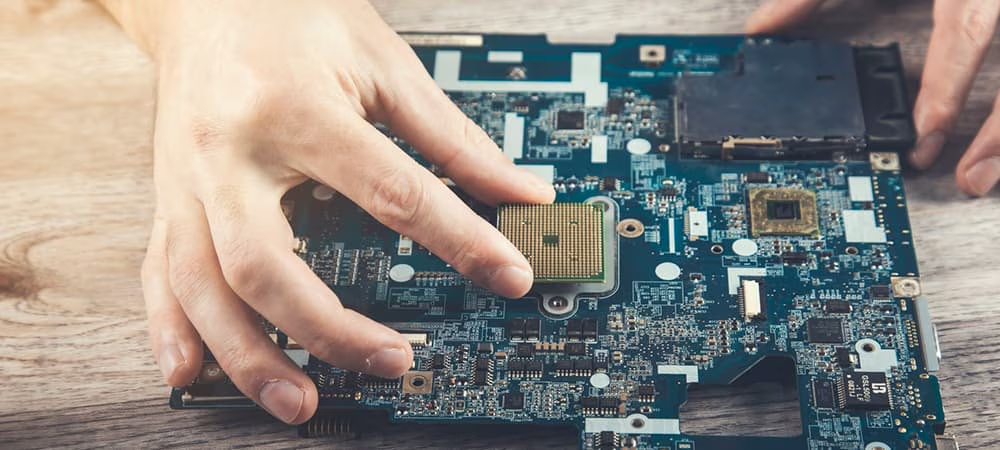
Power plants rely on embedded systems to monitor reactor temperatures that could melt steel, control turbine speeds that generate electricity for entire cities, manage electrical distribution across vast networks. The AMD A55E Fusion controller hub is exactly the kind of robust processing muscle needed for these mission-critical applications where downtime hemorrhages millions of dollars per hour.
Oil refineries, chemical plants, water treatment facilities. They all depend on embedded controllers to maintain safe operating conditions, making split-second decisions that prevent catastrophic disasters and protect entire communities from harm.
Consumer electronics revolution
That smartphone nestled in your pocket contains more embedded processors than a fighter jet from the 1990s, which honestly blows my mind every time I consider it. Each component demands its own dedicated chipset: camera image processing, wireless communication, battery management, touchscreen control. It’s like a miniature orchestra where every musician plays a different instrument perfectly in sync.
Smart home devices have transformed houses into sprawling networks of embedded systems. Your doorbell recognizes faces with creepy accuracy. Your speaker responds to voice commands even when you’re whispering. Your refrigerator orders groceries automatically (and sometimes gets it hilariously wrong).
The future? Already embedded
Autonomous vehicles represent embedded systems’ next evolutionary leap. Self-driving cars process sensor data from cameras, lidar, and radar using embedded processors that make thousands of split-second decisions while you sit there reading emails or napping. The computational requirements are absolutely staggering.
Internet of Things devices multiply these embedded systems exponentially, like digital rabbits breeding in server farms. By 2025, experts predict over 75 billion connected devices worldwide. Each device requires embedded processors to collect data, make decisions, communicate with other systems in an endless electronic conversation.
But wait. There’s a plot twist. Edge computing pushes more processing power into embedded systems at the network’s periphery. Instead of sending all data on long journeys to distant cloud servers, embedded processors handle computation locally, slashing latency and improving response times dramatically.
The embedded revolution isn’t coming like some distant storm on the horizon. It’s already here, humming quietly in the background of everything we do, every decision we make, every breath we take.
Every time you flip a light switch, start your car, or check your phone, you’re interacting with embedded systems that make modern life not just possible, but magical.
We just don’t notice them because they work so damn well.