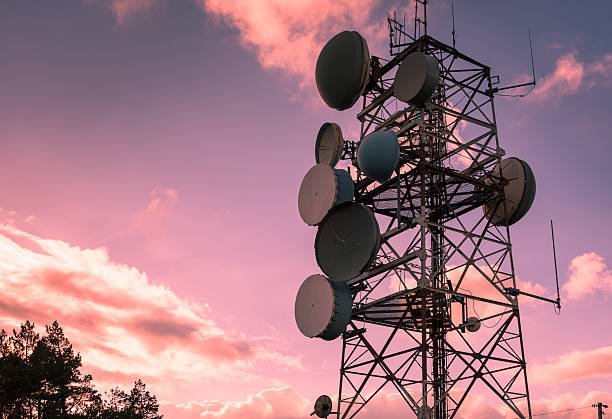
In today’s hyper-connected world, the need for reliable and efficient communication channels has never been greater. Microwave Communications is a technology that plays a critical role in providing seamless connectivity across vast distances. As industries and individuals demand high-speed internet and continuous communication, understanding the capabilities and applications of microwave communications is essential.
Understanding Microwave Communications
Microwave communications refers to the transmission of information or energy using electromagnetic waves with wavelengths in the microwave range, typically from one meter to one millimeter. These waves are utilized for a wide array of applications, including telecommunication, broadcasting, and radar. The technology enables the transmission of voice, data, and video signals over long distances without the need for physical cables, making it a cost-effective solution for remote or challenging environments.
Applications of Microwave Communications
Microwave communications are utilized in a variety of applications across different sectors. One of the most notable uses is in cellular networks, where microwave links connect mobile towers to ensure uninterrupted service. Additionally, they are employed in television broadcasting, allowing signals to be transmitted from the studio to the transmitter tower. Microwave technology is also fundamental in satellite communications, which rely on microwave bands to transmit signals from the Earth’s surface to satellites and back.
Role in Public Safety and Defence
Microwave communications are crucial in public safety and defence sectors. They provide reliable and secure communication channels for emergency responders and military operations. The technology’s ability to function effectively in extreme conditions makes it a valuable asset for mission-critical communications.
Enhancing Internet Connectivity
With the growing demand for high-speed internet, microwave communications serve as a backbone for many broadband services, particularly in rural or hard-to-reach areas. Microwave links can deliver substantial bandwidth, enabling fast and reliable internet connections. This aspect is vital in bridging the digital divide and ensuring equitable access to digital resources.
Advantages of Microwave Communications
One of the main advantages of microwave communications is their low operational cost compared to traditional wired infrastructure. Once the initial setup is completed, the technology requires minimal maintenance. Additionally, microwave links can be rapidly deployed, making them ideal for emergency setups and temporary installations.
Line-of-Sight Requirements
Microwave communications do require a direct line of sight between transmission points, which can be a limitation in regions with challenging topography. However, advancements in technology and strategic planning can often overcome these barriers, ensuring robust connectivity even in complex environments.
Scalability and Flexibility
The scalability of microwave networks allows organisations to easily expand their communication capacity as needed. The flexibility to implement point-to-point or point-to-multipoint connections ensures that the technology can be tailored to specific organisational needs, supporting a range of communication requirements from small businesses to large enterprises.
Challenges and Considerations
While microwave communications offer numerous benefits, there are challenges to be considered. The requirement for a clear line of sight, potential interference from atmospheric conditions, and frequency licensing issues are factors that need to be addressed to optimise the performance of microwave links.
Addressing Interference
Signal interference can arise from various sources, including weather conditions like rain and fog that can absorb or scatter microwave signals. To mitigate these effects, engineers can employ adaptive modulation techniques and frequency diversity strategies, ensuring sustained performance amidst fluctuating environmental conditions.
Spectrum Availability
Another crucial consideration is the availability of spectrum. As microwave communications rely on specific frequency bands, obtaining the necessary spectrum licenses can be a challenge in regions with high demand. Collaborative efforts between industry stakeholders and regulatory authorities are vital in ensuring spectrum efficiency and availability.
The Future of Microwave Communications
The future of microwave communications appears promising as technological innovations continue to address existing challenges. Emerging technologies, such as millimetre wave systems, are expected to enhance the capacity and efficiency of microwave links, further solidifying their role in global connectivity solutions.
As industries evolve and the demand for data continues to soar, microwave communications are set to play an increasingly pivotal role in supporting various connectivity needs. For organisations seeking to harness the full potential of this technology, understanding its capabilities and limitations is crucial to making informed decisions that will propel them into a connected future.