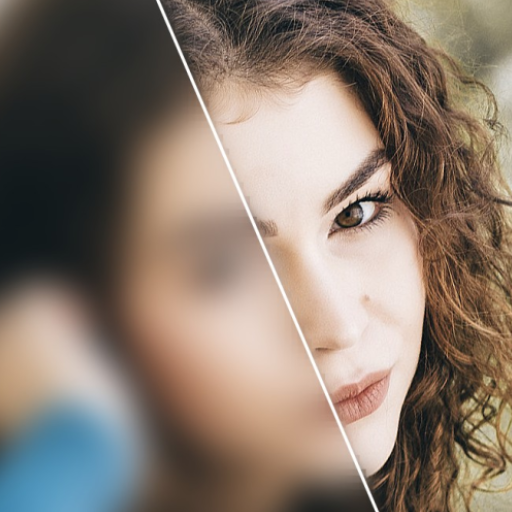
Poorly-focused photos have been a bane of photography. Even a small change in hand movements, low light, or movement at the wrong time can make a shot that would have been a masterpiece into a visual failure. But nowadays, the technology of blurring photos is being transformed by AI unblur photo, which is transforming the way we handle these flaws. Artificial intelligence provides a clever, effective means of reclaiming clarity and details in images previously deemed useless instead of accepting blur as permanent.
In contrast to the methods of traditional photo-editing, which are based on manual sharpening or filters, the AI-based unblurring is centered on the analysis of the image. It does more than accentuate edges; it deciphers depth, context, and structure. Such a change represents a significant evolution of digital imaging, as AI scans and solutions have become more realistic and accurate, as well as easy-to-get photos.
How AI Unblur Photo Works Differently
The difference between the tools of AI unblur photo is that they analyze images in a semantic form. When you use an ai unblur photo tool, the algorithm compares your blurry input against these learned patterns, reconstructing missing detail by predicting what sharp edges, textures, and features should look like based on context. It is through this training that they are taught how various objects, faces, and textures should look when they are well focused.
An uploaded blurred photo is analyzed by the AI that follows patterns, contrast,s and shapes in order to identify what has been removed. It then intelligently reconstructs those details as opposed to utilizing a generic enhancement. This enables AI unblur photo systems to reveal fine details – like eyes in portraits or writing in documents – without destroying the realism.
The conventional tools exaggerate the noise or create natural halo effects on the objects. The AI-based unblurring avoids such problems because it produces smooth and balanced images that do not look unnaturally processed but rather natural.
Practical Applications Across Daily Life
The application of the AI unblur photo technology is much more than just a simple photo repair. People use it to save valuable personal memories lunch pictures, childhood photos, or moments of the trip which can not be reproduced. These images can now be revived and preserved, as opposed to the loss of emotional value as a result of technical issues.
It is also very beneficial to professionals. Real estate agents sharpen the photos of properties, the content creators polish the pictures used in campaigns and the businesses refine the marketing materials without having to shoot them at a high cost. Academic and office AI unblurring facilitates the understanding of scanned documents, handwritten notes, and visuals in presentations to enhance the readability and efficiency of both documents and presentations.
AI unblur photo tools serve as a backup in mobile photography, where photos can be captured fast and on the spur of the moment. They make sure that the time taken in a hurry does not lose its effect because of mere blurring.
Vidguru AI: The Intelligence of Smart Unblurring.
The core of an advanced system of AI unblur photo lies in the so-called Vidguru AI, which is rather a generative intelligence method aimed at the generation of missing information, as opposed to improving the pixels that already exist. Vidguru AI initially examines the arrangement of an image and produces plausible details depending on the learned visual designs.
Indicatively, in restoring a face, Vidguru AI knows the facial symmetry, skin texture, and placement of features. It does not recreate the details blindly–it creates them in a manner that corresponds to the anatomy of a human being and to the natural light. This renders the reconstituted picture to look real and logical.
Vidguru AI is also image-type adaptive. There is a treatment of landscapes, portraits, text, and objects. With time, the larger the number of images processed by the system, the more it will be able to distinguish fine details, which means that AI unblur photo results will get more refined and credible.
AI Unblur Photo in Creative Industries
Rivalry photographers are adopting the use of creative technology to blur photos, which is called AI unblur photo. Images that would have otherwise been thrown away can be saved, and time and artistic intent are preserved. New projects are able to refine older images, which means that designers do not have to create new images.
Image quality is a direct impact of engagement in digital marketing. Clarity of images instils credibility and appeal. Unblurring of AI enables marketers to enhance the available content libraries, enhancing the performance of campaigns without involving extra production expenses.
It is also beneficial to video makers since various AI unblur photo technologies are currently being applied to frame-by-frame video processing. It creates new avenues of fixing old videos or enhancing poor-quality videos to fit new standards.
Accessibility and Speed: A Key Advantage
The level of accessibility is one of the largest strengths of the solutions of AI unblur photo. Users do not require complex knowledge of editing and professional software. The majority of AI applications provide basic operations: add a picture, work with it, and receive a more advanced version.
The other significant advantage is speed. It used to take several hours of manual edits to complete what could now be done in seconds. This efficiency is particularly important in cases where the professional handles large numbers of images or where he/she is faced with tight deadlines.
With the further development of AI, these devices are getting lighter and embedded in daily devices, such as smartphones and cloud computing systems. This is because quality image restoration has come to be a prerogative of experts no longer.
Ethical Limits and Responsible Improvement
In spite of its advantages, the technology of unblur photo with AI should be used in a responsible manner. Enhancing clarity is a significant issue that differs from reality change. Transparency is critical in sensitive cases, e.g., journalism, legal documentation, or research.
The creators of responsible AI stress that it should be used responsibly, with no excessive generation, and proper disclosures that the image is AI-enhanced should be provided. It is also the duty of the users to make sure that no unblurred images get misrepresented or used deceitfully.
Unblurring AI can be used as an access and clarity tool and not a manipulation tool when done ethically. This is a vital balance of creating trust in AI-generated visual content over the long term.
The Future of AI Unblur Photo
There is a bright future for the AI unblur photo technology. With a more sophisticated AI model, unblurring will enhance sharpness as well as color accuracy, depth, and lighting. Live-time improvements to capture photos are becoming more and more possible, particularlywith the developments in mobile hardware.
The role of AI unblurring will further be extended with the involvement of augmented reality, virtual reality, and smart cameras. Live video calls with motion blur fixed in real-time or a wearable that sharpens the image as you go.
Vidguru AI will remain at the core of this development and will allow the systems to process visual information more profoundly and produce the results that are closer to human interpretation and beauty.
Conclusion
AI unblur photo in vidguru technology represents a powerful shift in how we approach image quality. By combining intelligent analysis with generative capabilities, it transforms blurry visuals into clear, usable, and visually appealing images. Supported by Vidguru AI, this technology goes beyond simple enhancement, offering context-aware restoration that feels natural and precise.
As accessibility increases and ethical frameworks strengthen, AI unblur photo tools will become an essential part of digital life. From preserving personal memories to supporting professional creativity, they ensure that moments aren’t lost to blur—but brought back into focus with intelligence and care.